

 LC1E3810BD↓ 40% off1 / 5

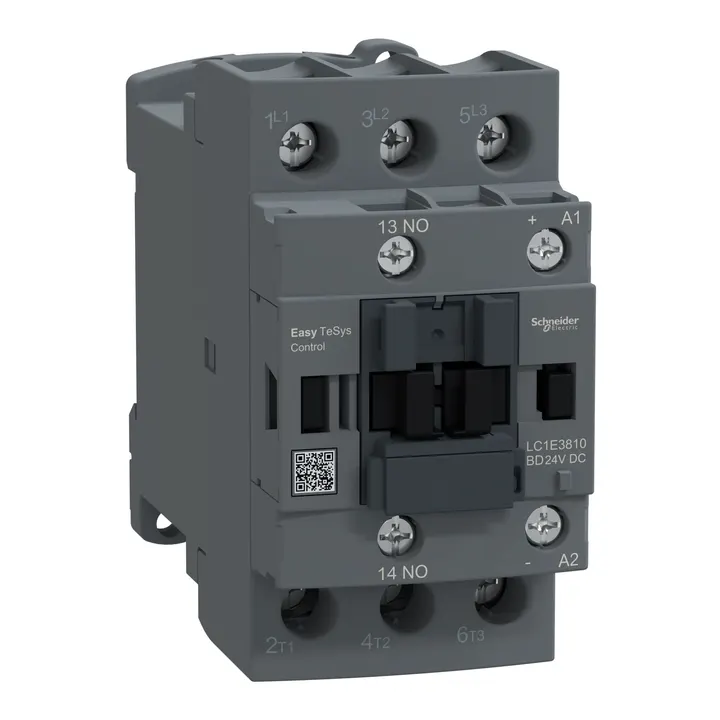
Schneider Easy TeSys LC1E Power Contactor · 3P · 38 A AC-3 · 1 NO aux · 24 V DC coil · LC1E3810BD
Easy TeSys Control contactor 3 poles for motor applications up to 38A 18.5kW@440V. It provides a 24V DC coil, 1NO built-in auxiliary contacts, power and control connections by screw clamp terminals. It provides standard reliability and durability with 0.9 Mcycles electrical durability AC-3 and 8 Mcycles mechanical durability. The dimension is 84mm x 1mm x 86mm (HxWxD), clipping on DIN rail or fixing by screw. It can cover -5°C to 55°C working temperature, no derating up to 3000m altitude. Multi-standards certified (IEC,CE,EAC) and Green Premium compliant (RoHs/Reach).
How do I choose a contactor for my motor?
Select by the contactor's AC-3 current (or kW) rating at your supply voltage, which should be at least the motor's full-load current from the nameplate. Do not go by the higher AC-1 rating, which applies only to resistive loads (contactors are covered by IS/IEC 60947-4-1).
What is the difference between AC-1 and AC-3 rating?
AC-1 is for non-inductive or slightly inductive loads like heaters, while AC-3 is for starting and stopping squirrel cage motors. The same contactor has a much lower AC-3 rating than AC-1, and AC-4 (inching or plugging) is even more demanding.
Does a contactor protect the motor?
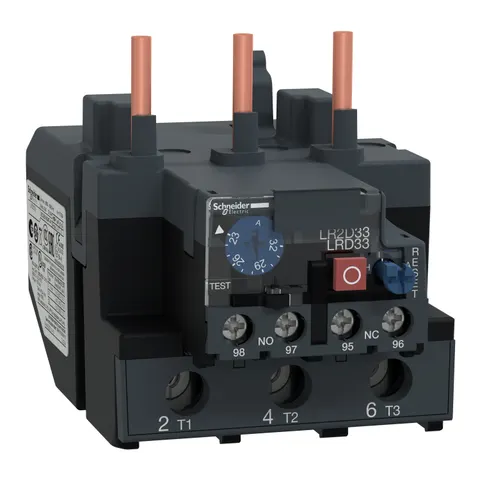
No. A contactor only switches the motor on and off; overload protection needs a thermal overload relay and short-circuit protection needs an MPCB, MCB, MCCB or fuses upstream.
Why is my contactor humming or chattering?
Common causes are low or fluctuating control voltage, a wrong coil voltage, dust or rust on the magnet faces, or a broken shading ring. Check the supply at the coil terminals first, then clean or replace the contactor if needed.
How many auxiliary contacts does this have and can I add more?
Most contactors have built-in auxiliary contacts (NO and/or NC) for holding and interlocking circuits, and many allow add-on auxiliary blocks on the front or side. Check the contact configuration and add-on compatibility in the product details.
How many contactors do I need for a star-delta starter?
A star-delta starter uses three contactors (main, delta and star), a star-delta timer and an overload relay. The main and delta contactors are typically sized at about 58% of the motor current and the star contactor smaller, as per the manufacturer's selection table.