

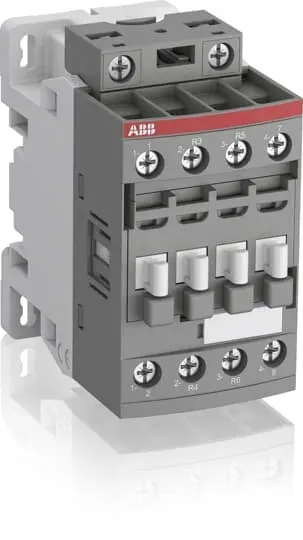
 1SBL177501R1400↓ 53% off MRP

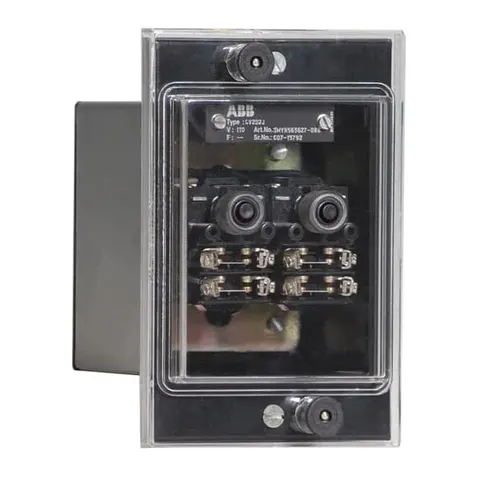
ABB AF16-22-00-14 250-500V50/60HZ-DC Contactor · 1SBL177501R1400
NEW added this week- Secured by Razorpay · UPI, cards, net banking, wallets
- GST invoice, claim input tax credit
- Tracked delivery, 5 to 7 working days
ABB AF16-22-00-14 250-500V50/60HZ-DC Contactor · 1SBL177501R1400: Elume price today ₹5,848 per pc incl. GST, 53% below the ₹12,390 MRP. The price has held steady for the last 30 days.
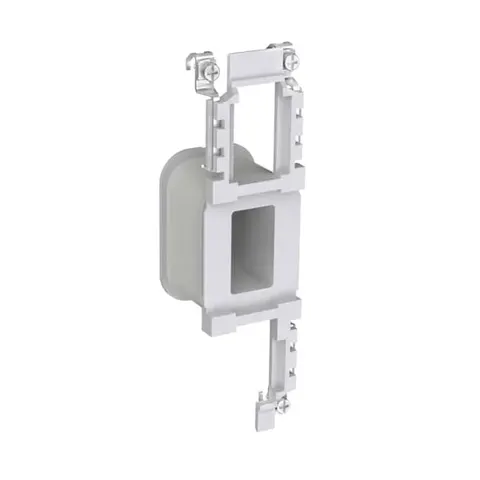
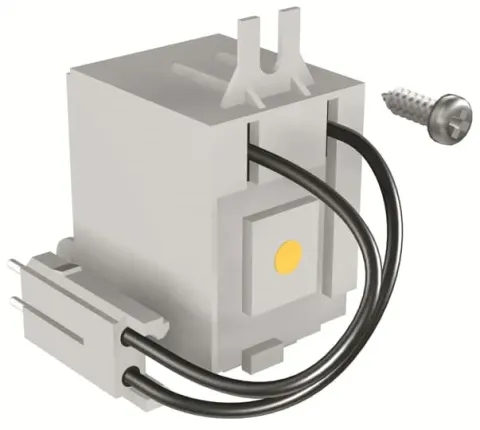
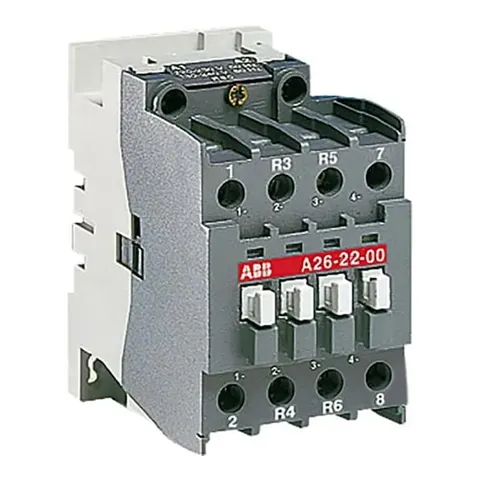
AF16 4-pole contactors are used for controlling power circuits up to 690 V AC and 440 V DC. They are mainly used for controlling non-inductive or slightly inductive loads (i.e. resistance furnaces...). AF... contactors include an electronic coil interface accepting a wide control voltage Uc min. ... Uc max. Only four coils cover control voltages between 24...500 V 50/60 Hz or 20...500 V DC. AF contactors can manage large control voltage variations. One coil can be used for different control voltages used worldwide without any coil change. AF contactors have built-in surge protection and do not require additional surge suppressors. The AF... series 4-pole contactors are of the block type design. - Main poles and auxiliary contact blocks: 2 N.O. + 2 N.C. main poles, front and side-mounted add-on auxiliary contact blocks (mechanically-linked auxiliary contacts compliant with Annex L of IEC 60947-5-1. N.C. mirror contacts compliant with Annex F of IEC 60947-4-1) - Control circuit: AC or DC operated - Accessories: a wide range of accessories is available.
How do I choose a contactor for my motor?
Select by the contactor's AC-3 current (or kW) rating at your supply voltage, which should be at least the motor's full-load current from the nameplate. Do not go by the higher AC-1 rating, which applies only to resistive loads (contactors are covered by IS/IEC 60947-4-1).
What is the difference between AC-1 and AC-3 rating?
AC-1 is for non-inductive or slightly inductive loads like heaters, while AC-3 is for starting and stopping squirrel cage motors. The same contactor has a much lower AC-3 rating than AC-1, and AC-4 (inching or plugging) is even more demanding.
Does a contactor protect the motor?
No. A contactor only switches the motor on and off; overload protection needs a thermal overload relay and short-circuit protection needs an MPCB, MCB, MCCB or fuses upstream.
Why is my contactor humming or chattering?
Common causes are low or fluctuating control voltage, a wrong coil voltage, dust or rust on the magnet faces, or a broken shading ring. Check the supply at the coil terminals first, then clean or replace the contactor if needed.
How many auxiliary contacts does this have and can I add more?
Most contactors have built-in auxiliary contacts (NO and/or NC) for holding and interlocking circuits, and many allow add-on auxiliary blocks on the front or side. Check the contact configuration and add-on compatibility in the product details.
How many contactors do I need for a star-delta starter?
A star-delta starter uses three contactors (main, delta and star), a star-delta timer and an overload relay. The main and delta contactors are typically sized at about 58% of the motor current and the star contactor smaller, as per the manufacturer's selection table.