
🚚 Free delivery over ₹4,000 pan-India · we also ship worldwide · Buying in bulk? Get a quote in 24 hours →
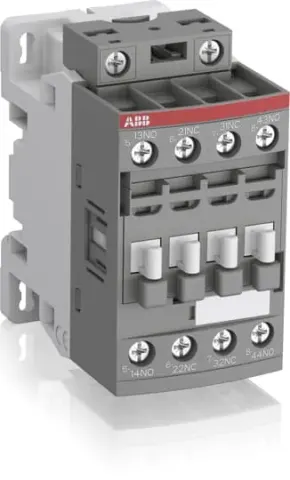
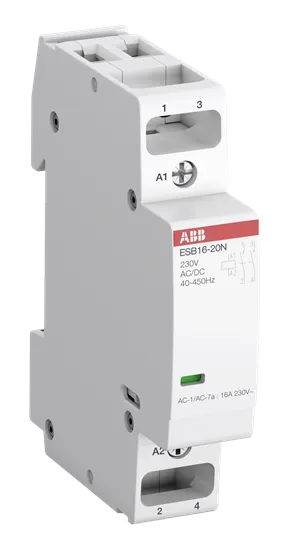
ABB ESB16-11N-06 Installation Contactor · 1SBE111111R06111SBE111111R0611↓ 53% off
BrandABB
CategorySwitchgear
SpecificationESB16-11N-06 · Installation Contactors
Brand SKU1SBE111111R0611
AvailabilityIn stock · ships in 24h
Delivery8 to 15 business days after dispatch
ABB· In stock
Visit the ABB store

ABB ESB16-11N-06 Installation Contactor · 1SBE111111R0611

$43.52/pc-53%
$92.23
Wholesale · 15+ units
$41.35 /pc
Add to cart
Buy now
Delivery in 8 to 15 business days after dispatch
Buying in bulk? Ask our Export desk for a quote.
$43.52 /pc
Delivery in 8 to 15 business days
🏷️
100% genuine
Brand-authorised stock, sourced through authorised channels
🧾
Export invoice
Every international order ships with an export invoice for customs
🌍
Worldwide delivery
Dispatched from Ghaziabad, India · fee by weight, shown at checkout
📦
Wholesale built in
Wholesale price at 15+ units: $41.35/pc on this product, applied automatically

The ESB16..N installation contactors are used to control single loads up to 16 A and can be operated by AC or DC. These contactors are made for use in household applications as well as in industrial environments. The following benefits are provided: Hum-free operation, low power consumption and integrated overvoltage protection. Various contact combinations and accessories are available.
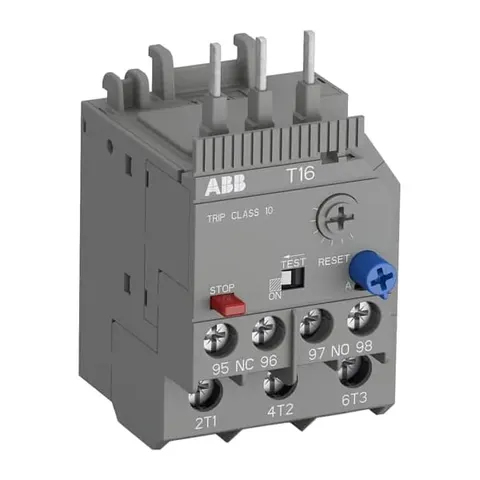
As published by ABB. Verify critical parameters against the datasheet before specifying.
ABB ABB ESB16-11N-06 Installation Contactor · 1SBE111111R0611 · 1SBE111111R0611
Device typeContactor
SeriesInstallation Contactors
Poles2P (DP)
FrequencyControl Circuit DC
Insulation voltage (Ui)400 V
Country of originBulgaria
Reference standardIS/IEC 60898-1
BrandABB
Brand SKU1SBE111111R0611
ELINERHMHKCH77
Sold asPer pc
Package Width88 mm
Terminal TypeScrew Terminals
Package Height71 mm
Package Length20 mm
Number of Poles2
Coil ConsumptionAverage Holding Value 50 / 60 Hz 2.5 V - A
Rated Frequency (f)Control Circuit DC
Package Gross Weight0.14 kg
Extended Product TypeESB16-11N-06
Ambient Air TemperatureOperation -25 ... +55 °C
Full Load Amps Motor Use(220 ... 240 V AC) Single Phase, NC 6.9 A
Horsepower Rating UL/CSA(220 ... 240 V AC) Single Phase, NC 0.75 horsepower
General Use Rating UL/CSA(acc. to UL 240 V) 16 A
Number of Main Contacts NC1
Number of Main Contacts NO1
Max Operating Voltage UL/CSAMain Circuit 240 V AC
Rated Insulation Voltage (Ui)400 V
Rated Operational Power AC-3 (Pe)(230 V) Single Phase, NC 0.9 kW
Max Electrical Switching Frequency(AC-1) 300 cycles per hour
Rated Operational Current AC-1 (Ie)(NC) 16 A
Rated Operational Current AC-3 (Ie)(230 V) Single Phase, NC 6 A
Rated Short-time Withstand Current (Icw)at 40 °C Ambient Temp, in Free Air, from a Cold State 10 s 72 A
Automation & Control Rated Operational VoltageMain Circuit 220 V DC
Rated Making Capacity AC-3 acc. to IEC 60947-4-110 x Ie / AC-3
Rated Breaking Capacity AC-3 acc. to IEC 60947-4-18 x Ie / AC-3
Product RangeInstallation Contactors
Ratings as published by ABB (shop.in.abb.com listing for 1SBE111111R0611, 15 Nov 2026). Verify critical parameters against the datasheet before specifying.
Read: Contactor Sizing for 400 V and 415 V Motors: kW to Amps, AC-3 Ratings and Overload Relays →
What size contactor do I need for a 7.5 kW motor?
A 7.5 kW three-phase motor at 400 V draws about 14.5 A, so a contactor rated at least 16 to 18 A at AC-3 is the usual choice, with an overload relay set to the nameplate current.
What is the difference between AC-1 and AC-3?
AC-1 is the rating for resistive loads such as heaters; AC-3 is the rating for switching squirrel-cage motors in normal duty. Motors are always sized on the AC-3 figure, which is lower.
How many amps per kW for a three-phase motor?
At 400 V, roughly 2 A per kW for small motors, falling towards about 1.8 A per kW above 30 kW, because larger motors run at a better power factor and efficiency. Use the nameplate for the exact figure.
How do I choose a contactor for my motor?

Select by the contactor's AC-3 current (or kW) rating at your supply voltage, which should be at least the motor's full-load current from the nameplate. Do not go by the higher AC-1 rating, which applies only to resistive loads (contactors are covered by IS/IEC 60947-4-1).

What is the difference between AC-1 and AC-3 rating?

AC-1 is for non-inductive or slightly inductive loads like heaters, while AC-3 is for starting and stopping squirrel cage motors. The same contactor has a much lower AC-3 rating than AC-1, and AC-4 (inching or plugging) is even more demanding.

Does a contactor protect the motor?

No. A contactor only switches the motor on and off; overload protection needs a thermal overload relay and short-circuit protection needs an MPCB, MCB, MCCB or fuses upstream.

Why is my contactor humming or chattering?

Common causes are low or fluctuating control voltage, a wrong coil voltage, dust or rust on the magnet faces, or a broken shading ring. Check the supply at the coil terminals first, then clean or replace the contactor if needed.

How many auxiliary contacts does this have and can I add more?

Most contactors have built-in auxiliary contacts (NO and/or NC) for holding and interlocking circuits, and many allow add-on auxiliary blocks on the front or side. Check the contact configuration and add-on compatibility in the product details.

How many contactors do I need for a star-delta starter?

A star-delta starter uses three contactors (main, delta and star), a star-delta timer and an overload relay. The main and delta contactors are typically sized at about 58% of the motor current and the star contactor smaller, as per the manufacturer's selection table.

No reviews yet