

 RE17RMMWS↓ 40% off1 / 11

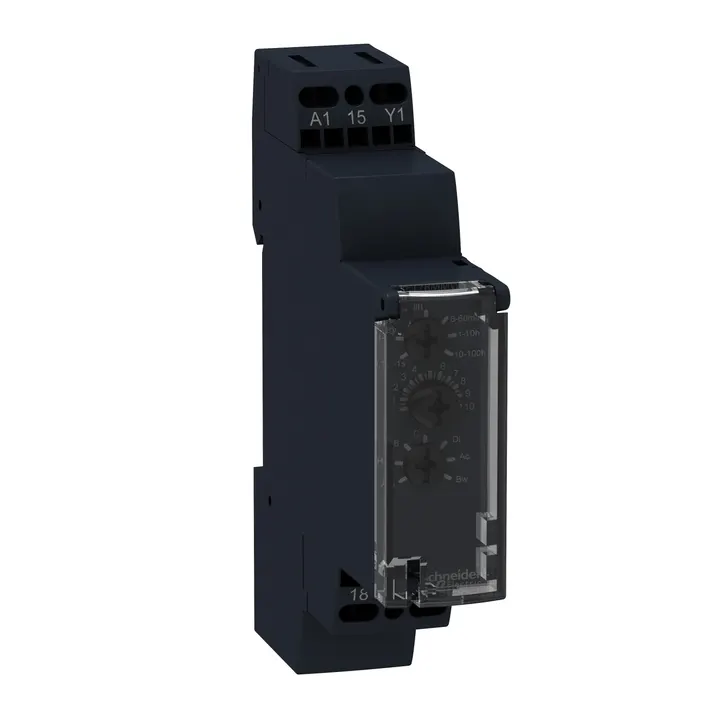
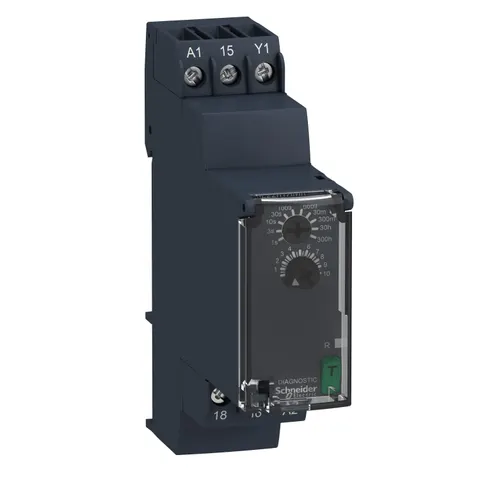
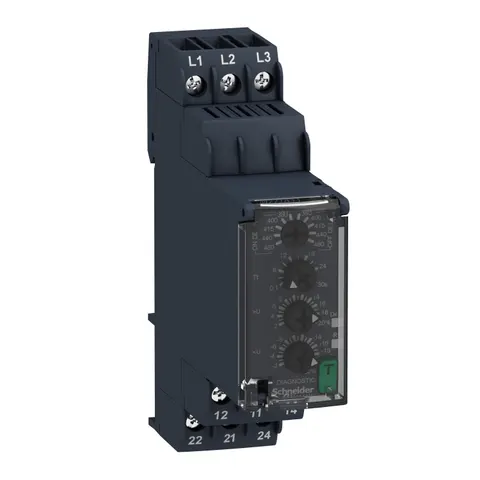
Schneider Harmony Timer RE17R Timing Relay · 10 functions · 12-240 V AC/DC · Spring terminals · 1 C/O · IP20 · RE17RMMWS
"This Harmony RE17R timing relay can be set between 0.1 seconds and 100 hours, has an output rating of 8A, is 17.5mm wide and can be supplied with 12V to 240V AC/DC." "It also has 1 changeover contact SPDT (single pole double throw)." "It has one of market slimmest form-factors, allowing for a flexible and easy installation on DIN rail, using the same space as any modular 1-pole DIN device." "It also offers a sealable cover, simple and precise settings with rotary trimmers." "Multi function timer for a simple integration in hard-wired logic schematics, ideal for refurbishment of old installations without using a PLC."
Which terminal block size do I need for my wire?
Choose by the conductor cross-section and current, such as 2.5 sq mm terminals for control wiring and 4, 6, 10 sq mm or larger for power wiring. The terminal's rated cross-section should be equal to or higher than the wire size (terminal blocks are covered by IEC 60947-7-1).
What is the difference between screw, spring and push-in terminals?
Screw terminals are tightened with a screwdriver and are widely used, spring-clamp terminals hold the wire with spring pressure and resist loosening from vibration, and push-in terminals let you insert solid or ferruled wires directly without tools. Spring and push-in types save wiring time and need less re-tightening.
Do I need end plates and end stoppers?
Yes. End plates cover the open side of the last terminal to prevent accidental contact, and end stoppers hold the terminal row firmly on the DIN rail. Most terminal blocks need these ordered separately.
Are earth terminals different from normal terminals?
Yes, earth (PE) terminals are green-yellow and make direct electrical contact with the DIN rail, which must itself be earthed (IEC 60947-7-2). They should be used for all protective earth connections in the panel.
Should I use ferrules with terminal blocks?
For stranded and flexible wires, crimped ferrules (lugs) are recommended to prevent loose strands and ensure a secure connection. Push-in terminals usually need ferrules for flexible wire.