
🚚 Free delivery over ₹4,000 pan-India · we also ship worldwide · Buying in bulk? Get a quote in 24 hours →
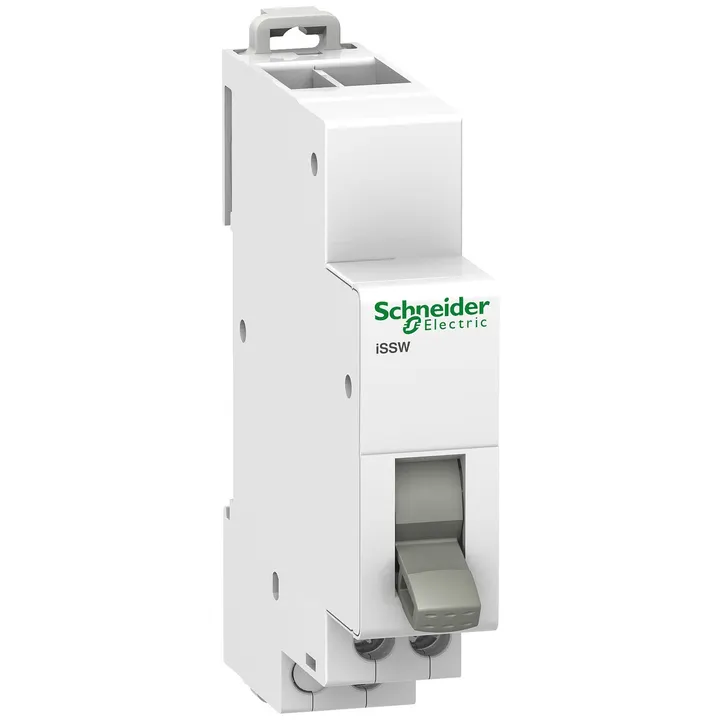
Schneider Acti9 iSSW Changeover Switch · linear switch · 1 C/O · 20 A · 250 V AC · 2 positions · A9E18070A9E18070↓ 40% off1 / 2
BrandSchneider
CategorySwitchgear
Specificationlinear switch · 1 C/O · 20 A · 250 V AC · 2 positions
Brand SKUA9E18070
AvailabilityIn stock · ships in 24h
Delivery8 to 15 business days after dispatch
Schneider· In stock
Visit the Schneider store

Schneider Acti9 iSSW Changeover Switch · linear switch · 1 C/O · 20 A · 250 V AC · 2 positions · A9E18070

$26.10/pc-40%
$43.50
Wholesale · 15+ units
$24.80 /pc
Add to cart
Buy now
Delivery in 8 to 15 business days after dispatch
Buying in bulk? Ask our Export desk for a quote.
$26.10 /pc
Delivery in 8 to 15 business days
🏷️
100% genuine
Brand-authorised stock, sourced through authorised channels
🧾
Export invoice
Every international order ships with an export invoice for customs
🌍
Worldwide delivery
Dispatched from Ghaziabad, India · fee by weight, shown at checkout
📦
Wholesale built in
Wholesale price at 15+ units: $24.80/pc on this product, applied automatically

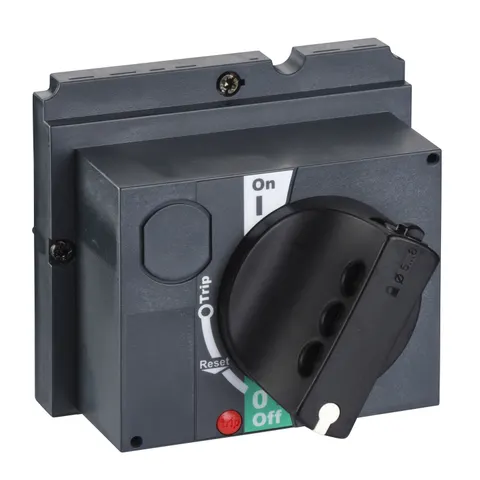
This Acti9 iSSW is a linear switch used for the manual control of electric circuits. It is 2 positions switch with 1 changeover contact (1 C/O). The phase-separated wall can be divided to allow all the types of com busbar to pass through. It comes with staggered terminals to simplify connection. The tightening torque of connection is 1N.m for PZ1 screwdriver type. The Ue rated operational voltage is 250VAC. The Ie rated operational current is 20A. The operating frequency is 50Hz. The connection allows rigid copper cables from 0.5mm² minimum to 2x2.5mm² maximum. The connection allows flexible or with ferrule copper cables from 0.5mm² minimum to 2x2.5mm² maximum. The number of cycles open and close (O-C) is 30000. The endurance is 30000 operations with AC22 current category under cos phi=0.8. The width in 9mm pitches is 2. The dimensions are (W) 18mm x (H) 82mm x (D) 75mm. The pollution degree is 3. The tropicalization is treatment 2 (relative humidity 95% at 55°C). The operational temperature is from -20°C to +50°C. The storage temperature is from -40°C to +70°C. It complies with IEC 60669-1 and IEC 60947-5-1 standards.
As published by Schneider. Verify critical parameters against the datasheet before specifying.
Schneider Schneider Acti9 iSSW Changeover Switch · linear switch · 1 C/O · 20 A · 250 V AC · 2 positions · A9E18070 · A9E18070
Poles1P (SP)
Rated current20 A
Ingress protectionIP20
Reference standardIEC 60669-1
ColourWhite
Device typeMiniature circuit breaker (MCB)
Current rating20 A
BrandSchneider
Brand SKUA9E18070
ELINEK9P3C969H
Sold asPer pc
Depth75 mm
Width18 mm
Height82 mm
Marking0 - 1
StandardsIEC 60669-1 · IEC 60947-5-1
9 mm pitches2
Control typeToggle 2 positions
Product nameActi9 iSSW
Mounting modeClip-on
Tropicalisation2
Mounting supportDIN rail
Pollution degree3
range of productActi9
Device short nameiSSW
Poles description1P
Relative humidity95 % at 55 °C
Tightening torque1 N.m
Device applicationElectrical circuit control
Electrical durabilityAC-22: 30000 cycles cos Phi = 0.8
Wire stripping length9 mm
Connections - terminalsStaggered tunnel terminal (downside) 2 cable(s) 0.5…2.5 mm² flexible · Staggered tunnel terminal (downside) 2 cable(s) 0.5…2.5 mm² rigid without cable end
IP degree of protectionIP20 conforming to IEC 60529
Product or component typeChangeover switch
Contacts type and composition1 C/O
[Ie] rated operational current20 A
[Ue] rated operational voltage250 V AC 50/60 Hz
Ambient air temperature for storage-40…70 °C
Ambient air temperature for operation-20…50 °C
Ratings as published by Schneider (se.com). Verify critical parameters against the datasheet before specifying.
Other Schneider ranges and models in this category, closest in price to this one.
Read: Contactor Sizing for 400 V and 415 V Motors: kW to Amps, AC-3 Ratings and Overload Relays →
What size contactor do I need for a 7.5 kW motor?
A 7.5 kW three-phase motor at 400 V draws about 14.5 A, so a contactor rated at least 16 to 18 A at AC-3 is the usual choice, with an overload relay set to the nameplate current.
What is the difference between AC-1 and AC-3?
AC-1 is the rating for resistive loads such as heaters; AC-3 is the rating for switching squirrel-cage motors in normal duty. Motors are always sized on the AC-3 figure, which is lower.
How many amps per kW for a three-phase motor?
At 400 V, roughly 2 A per kW for small motors, falling towards about 1.8 A per kW above 30 kW, because larger motors run at a better power factor and efficiency. Use the nameplate for the exact figure.
Which changeover switch do I need for a generator at home?

Use a changeover switch rated at least equal to your main incomer, with poles matching the supply (2 pole for single-phase, 4 pole for three-phase) so the neutral is also switched. This prevents generator power feeding back into the grid, which is dangerous for line workers, and installation should be done by a licensed electrician.

What is the difference between on-load and off-load changeover?

An on-load changeover switch is designed to transfer between mains and generator while current is flowing, while an off-load type must only be operated after the load is switched off. On-load types are safer and more convenient for most homes and shops; check the load rating on the product.

What is the difference between manual changeover and ATS?

A manual changeover needs someone to operate the handle when power fails, while an ATS (automatic transfer switch) senses mains failure and switches to the generator automatically, often also starting the DG set. ATS is used where unattended or quick changeover is needed.

Why does a changeover switch have a centre OFF position?

The centre OFF position ensures the load is fully disconnected from both sources before connecting to the other, so mains and generator can never be connected together. It is also used to isolate the load safely for maintenance.

Can I use a changeover switch for an inverter?

Yes, a changeover switch is often used to select between inverter output and mains, or to bypass the inverter during servicing. Size it for the circuits it will carry and make sure inverter output and mains are never paralleled.

No reviews yet