
🚚 Free delivery over ₹4,000 pan-India · we also ship worldwide · Buying in bulk? Get a quote in 24 hours →
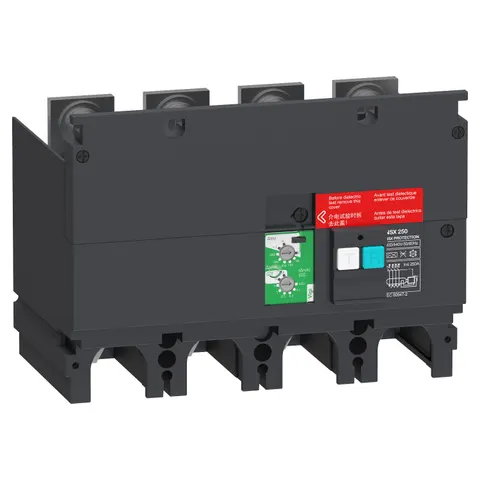
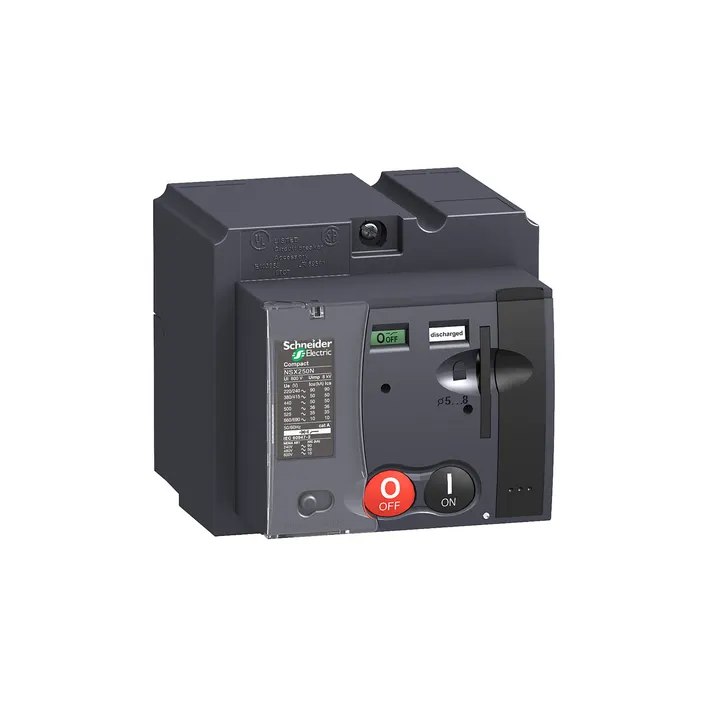
Schneider ComPacT NSX MT250 Motor Mechanism · MT 250 · Compact NSX250 · PowerPact Multistandard J · 208-277 V AC 60 Hz · LV431541LV431541↓ 40% off
BrandSchneider
CategorySwitchgear
SpecificationMT 250 · Compact NSX250 · PowerPact Multistandard J · 220 VAC to 240 VAC 50/60 Hz · 208 VAC to 277 VAC 60 Hz
Brand SKULV431541
AvailabilityIn stock · ships in 24h
Delivery8 to 15 business days after dispatch
Schneider· In stock
Visit the Schneider store

Schneider ComPacT NSX MT250 Motor Mechanism · MT 250 · Compact NSX250 · PowerPact Multistandard J · 208-277 V AC 60 Hz · LV431541

$556.65/pc-40%
$927.76
Wholesale · 15+ units
$528.82 /pc
Add to cart
Buy now
Delivery in 8 to 15 business days after dispatch
Buying in bulk? Ask our Export desk for a quote.
$556.65 /pc
Delivery in 8 to 15 business days
🏷️
100% genuine
Brand-authorised stock, sourced through authorised channels
🧾
Export invoice
Every international order ships with an export invoice for customs
🌍
Worldwide delivery
Dispatched from Ghaziabad, India · fee by weight, shown at checkout
📦
Wholesale built in
Wholesale price at 15+ units: $528.82/pc on this product, applied automatically

This is a standard motor mechanism for Compact NSX 250 and PowerPact Multistandard J frame devices that allows automatic device spring-charging. It helps the circuit breaker to feature a high mechanical endurance as well as easy and sure opening or closing operations. It provides a double insulation of the front face and all indications remain visible and accessible. The control voltage of this motor mechanism module is 220VAC to 240VAC 50/60Hz or 208VAC to 277VAC 60Hz. The consumption is less than 500VA. Padlocking of the device remains possible. The motor mechanism is supplied with SDE adapter.
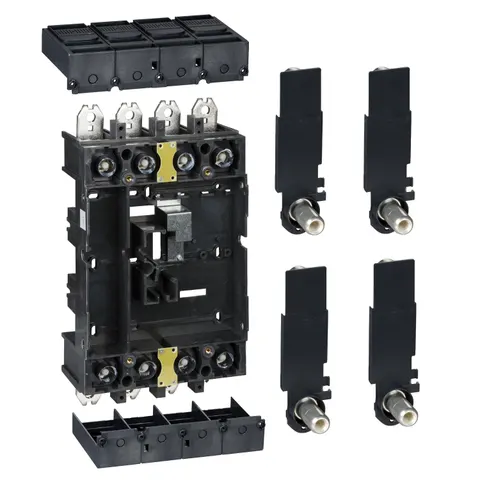
As published by Schneider. Verify critical parameters against the datasheet before specifying.
Schneider Schneider ComPacT NSX MT250 Motor Mechanism · MT 250 · Compact NSX250 · PowerPact Multistandard J · 208-277 V AC 60 Hz · LV431541 · LV431541
coil voltage208...277 V AC 60 Hz
Device typeMiniature circuit breaker (MCB)
Reference standardIS/IEC 60898-1
BrandSchneider
Brand SKULV431541
ELINEJR9PMMKP7
Sold asPer pc
Control typeStandard
Device short nameMT250
Device applicationAutomatic spring charging
Provided equipmentSDE adaptor
Control signal typeMaintained · Impulse
Range compatibilityComPacT NSX250 · ComPacT NSX250 DC
Product or component typeMotor mechanism
Locking options description1 to 3 padlocks Ø 5 to Ø 8 · Padlocking in OFF position
Maximum operating frequency4 per minute
[Uc] control circuit voltage208...277 V AC 60 Hz · 220...240 V AC 50/60 Hz
circuit breaker mounting modeFixed
circuit breaker response time< 700 ms open · < 80 ms closed
Maximum power consumption in VA500 VA closing · 500 VA opening
circuit breaker frame rated current250 A
Ratings as published by Schneider (se.com). Verify critical parameters against the datasheet before specifying.
Other Schneider ranges and models in this category, closest in price to this one.
Read: Contactor Sizing for 400 V and 415 V Motors: kW to Amps, AC-3 Ratings and Overload Relays →
What size contactor do I need for a 7.5 kW motor?
A 7.5 kW three-phase motor at 400 V draws about 14.5 A, so a contactor rated at least 16 to 18 A at AC-3 is the usual choice, with an overload relay set to the nameplate current.
What is the difference between AC-1 and AC-3?
AC-1 is the rating for resistive loads such as heaters; AC-3 is the rating for switching squirrel-cage motors in normal duty. Motors are always sized on the AC-3 figure, which is lower.
How many amps per kW for a three-phase motor?
At 400 V, roughly 2 A per kW for small motors, falling towards about 1.8 A per kW above 30 kW, because larger motors run at a better power factor and efficiency. Use the nameplate for the exact figure.
When do I need an MCCB instead of an MCB?

MCBs typically go up to 63A or 125A, so MCCBs are used for higher currents (roughly 16A to 1600A), as main incomers of buildings, panels and sub-panels, or where higher breaking capacity and adjustable settings are needed. MCCBs are covered by IS/IEC 60947-2.

What is the difference between Icu and Ics?

Icu is the ultimate breaking capacity the MCCB can interrupt once, while Ics is the service breaking capacity it can interrupt and still remain usable. Choose an MCCB whose Icu exceeds the prospective fault current at the installation point; for critical feeders, a higher Ics (ideally 100% of Icu) is preferred.

Should I take a 3 pole or 4 pole MCCB?

Use 3 pole where only the phases need switching, and 4 pole where the neutral must also be isolated, such as generator changeover systems, incomers with unbalanced single-phase loads or where local rules require neutral isolation. Your panel designer or electrician should decide based on the earthing system.

Can I adjust the current setting of an MCCB?

Many MCCBs have an adjustable overload setting (for example 0.8 to 1 times the frame rating, or wider on electronic releases), and some allow short-circuit adjustment too. Fixed-release MCCBs cannot be adjusted, so check the release type before buying.

What accessories can be added to an MCCB?

Common add-ons include auxiliary and trip alarm contacts, shunt trip and undervoltage releases, rotary handles for door mounting, motor operators for remote switching, and terminal spreaders or extended terminals for larger cables. Accessories are usually specific to the brand and frame size.

No reviews yet