

 A9N16254↓ 40% off1 / 2

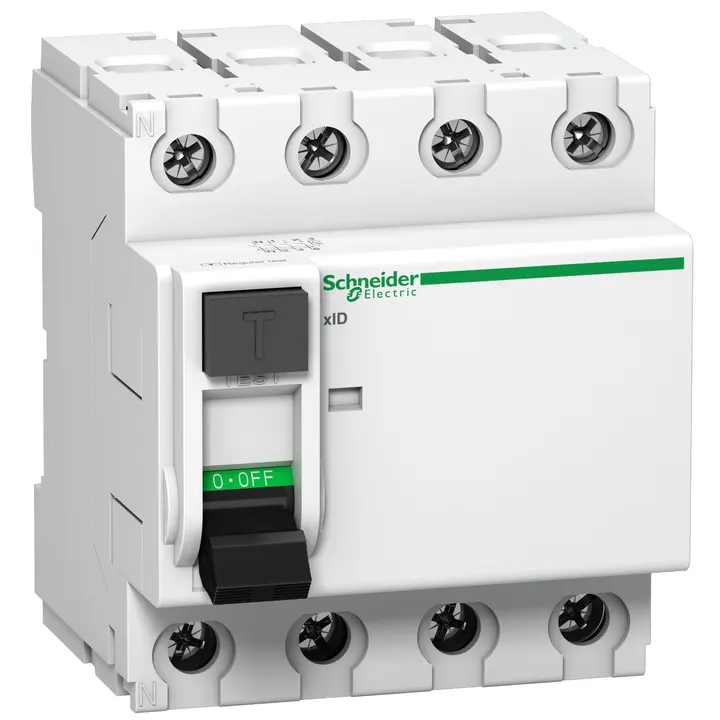
Schneider Acti9 xID RCCB · 4P · 40 A · 30 mA · Type AC · A9N16254
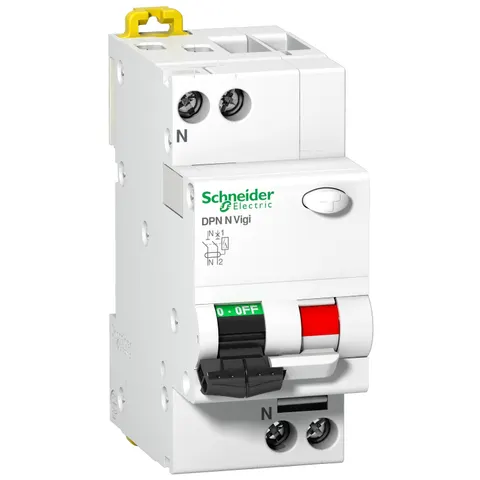
This product is a Acti9 xID biconnect residual current circuit breaker (RCCB). It is a 4P circuit breaker with 40A In rated current, 30mA earth leakage sensitivity and AC type protection class. This product protects against electrical shock by direct or indirect contact and fire hazards. The connection is made downstream by biconnect comb busbar or upstream/downstream by tunnel terminals. It is compliant with IEC/EN 61008-1 standard. The (Im/IΔm) rated breaking and making short circuit capacity is up to 500A . It has an electrical endurance going up to 4000 cycles and a mechanical endurance going up to 4000 cycles. The Ue operational voltage is 400VAC to 415VAC. The Ui rated insulation voltage is 500VAC. The Uimp rated impulse withstand voltage is 6kV. The frequency is 50Hz. It is DIN rail mountable. The width in 9mm pitches is 8. The product colour is white (RAL9003). The dimensions are (W) 72mm x (H) 81mm x (D) 75mm. The weight is 370g. According to IEC 60529 standard, the degree of protection is IP20 and IP40 in enclosure. The operating temperature is from -5°C to 40°C. The storage temperature is from -40°C to 85°C.
Is 30mA or 100mA RCCB right for home?
For protecting people from shock, use 30mA on circuits feeding sockets, bathrooms, kitchens and outdoor points. 100mA or 300mA RCCBs are mainly for fire protection and are often used upstream as a main device, with 30mA protection on the final circuits.
Does an RCCB need an MCB with it?
Yes. An RCCB only detects earth leakage and does not protect against overload or short circuit, so it must be backed up by an MCB or fuse of a rating given in the manufacturer's data (RCCBs are covered by IS 12640 (Part 1)).
Why does my RCCB keep tripping?
Common causes are genuine leakage from a faulty appliance (often a geyser element, pump or washing machine), moisture in wiring, neutral of one circuit being shared with another, or many electronic loads adding up their small leakages. Switch off all MCBs and turn them on one by one to find the culprit circuit, and have an electrician test insulation; never bypass the RCCB.
What is the difference between Type AC and Type A RCCB?
Type AC detects only sinusoidal AC leakage, while Type A also detects pulsating DC leakage produced by electronic loads like inverter ACs, washing machines, induction cooktops and LED drivers. Type A is the safer choice for modern homes with many electronic appliances; EV chargers and VFDs may need Type B or a charger with built-in DC detection.
How often should I press the test button?
Manufacturers commonly recommend pressing the test button regularly, often once a month; check the interval in the product's instructions. The RCCB should trip immediately, and if it does not, have an electrician check and replace it.
What current rating RCCB do I need - 25A, 40A or 63A?
The RCCB's rated current should be equal to or higher than the MCB or main switch feeding it, because it must carry the full load current. Many Indian homes use 40A or 63A RCCBs at the incomer; for a single circuit, 25A is common.