

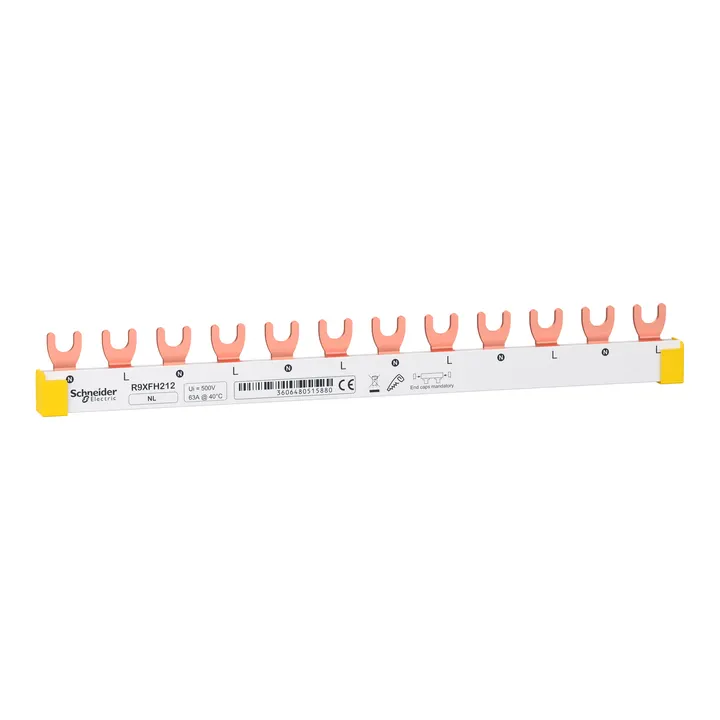
 R9XFH212↓ 40% off

Schneider Resi9 Comb Busbar · 1L+N · 18 mm pitch · 12 modules · 63 A · R9XFH212
Experience the efficient and safe power distribution with the Resi9 comb busbar, featuring a horizontal, insulated, cuttable design for customized installations. Dedicated to (Neutral, Line) installations, the comb busbar ensures a reliable distribution type (N, L1). It has a width of 12 modules of 18mm, ensuring compatibility with various installations. Suitable for 6 devices of 1P+N or 2P, the comb busbar features a distance of 36mm between ways, ensuring optimal compatibility and efficiency. It is compatible with Resi9 devices such as MCB, RCCB, RCBO, SWITCH, and Acti9 K60. Its current rating is 63A at 40°C and the rated voltage is 230VAC between phase and neutral. The Ui rated insulation voltage is 500VAC. It is certified with CE certifications. The pollution degree is 3. Its colour is white (RAL 9003). The resistance to flames and abnormal heat is rated at 960°C within 30 seconds, in accordance with IEC 60695-2-1 standard, ensuring superior safety and durability. This comb busbar complies with EN/IEC 61439-1 standard. The Resi9 protection range provides security and simplicity with devices easy to install as well as to dismount. Composed of robust and stylish products, they an
What is the difference between pin type and fork type busbars?
Pin type busbars have pins that fit into the MCB's busbar terminal, while fork type busbars have forks that clamp under the terminal screw. Choose the type that matches the MCBs you are using.
Will this busbar fit MCBs of another brand?
Busbars are usually designed for a standard 18mm module pitch, but terminal depth and shape can vary between brands. Check compatibility with your MCB range before buying.
Copper or aluminium busbar - which is better?
Copper has higher conductivity and is more compact for the same current, while aluminium is lighter and economical but needs larger cross-section and proper jointing. For DBs and panels, copper busbars are commonly preferred.
Why should I use blanking plates in empty DB ways?
Blanking plates (blanking modules) cover unused ways so no one can touch live busbars through the gaps. They are an essential safety part and also keep dust and insects out of the DB.
Do I need a separate neutral link for each RCCB?
Yes, when a DB has more than one RCCB, each RCCB must have its own neutral link so that neutrals of its circuits do not mix with others. Mixing neutrals causes nuisance tripping.