

How Many Ways Should Your Distribution Board Have? 4, 8, 12 or 16 Way Explained
- A 'way' is one outgoing slot for a single-pole MCB module. Count your circuits, add the RCCB's width, then add 25 to 30 percent spare.
- Typical fits: 1BHK 6 to 8 way, 2BHK 8 to 12 way, 3BHK 12 to 16 way, single phase (SPN).
- Three-phase homes use TPN boards, organised per phase; the counting logic is the same per phase.
- Every AC, geyser and kitchen power circuit deserves its own way; that is where the count grows fastest.
- Buying a size bigger costs a few hundred rupees; adding a second DB later costs thousands. Spare ways are the cheapest future-proofing in the house.
The distribution board is the index page of a house's electrical system: every circuit begins there, every fault is isolated there, and every future addition either finds a spare way there or starts an ugly workaround. Boards are sold by 'ways', the number of single-module slots on the outgoing DIN rail, and choosing that number is a five-minute counting exercise that owners usually delegate and later regret.
This guide explains what counts as a way, how many a typical 1, 2 and 3BHK needs, the difference between SPN and TPN boards, and how a well-dressed board is laid out so that the electrician who opens it in 2040 says a quiet thank you.
What a 'way' actually counts
One way is one module-width on the outgoing rail, the space one single-pole MCB occupies. Wider devices consume multiple ways: a double-pole RCCB or isolator takes two, a four-pole device takes four. So an '8 way SPN' board does not mean eight circuits once protection is placed: a 40 A DP RCCB (2 ways) plus six single-pole MCBs fills it exactly, with zero spare. This is the arithmetic that catches most buyers, and it is why the way count you buy should always be computed as circuits + incomer devices + spares, not circuits alone. Board datasheets list the way count for the outgoing section separately from the incomer section on better models.
Counting circuits for a real home
List circuits, not rooms. A sensible 2BHK: two lighting circuits (living plus bedrooms split), two socket circuits, one kitchen power circuit at 16 A, one AC circuit per AC, one geyser circuit per geyser, and one spare-capacity circuit for the washing machine or a future appliance. That is eight to ten single-pole ways before protection. A 3BHK with three ACs and two geysers reaches twelve to fourteen. The principle driving the count: every fixed heavy appliance gets a dedicated circuit so its fault or maintenance never darkens the rest of the house, and lighting is split so no single trip blacks out the whole home at night.
The standard fits: 1BHK to 3BHK
With counting done, homes cluster predictably. A 1BHK or studio: 6 to 8 way SPN. A 2BHK: 8 to 12 way, with 12 the wiser buy for kitchens full of appliances. A 3BHK on single phase: 12 to 16 way. Large 3 and 4BHKs, or any home with three-phase supply, move to TPN boards (typically 4, 6 or 8 ways per phase) where circuits are balanced across phases: ACs spread over different phases, lighting likewise, so one phase outage never kills all light. Double-door metal boards with proper earthing terminals, IP-rated for their location, are worth the small premium over the shallowest builder-grade enclosures.
SPN vs TPN: matching the board to the supply
SPN (Single Phase and Neutral) boards serve the single-phase 230 V connections most Indian flats have: one phase busbar, one neutral link, one earth bar. TPN (Three Phase and Neutral) boards serve 415 V three-phase connections in larger homes and villas: three phase sections plus neutral, with either a four-pole incomer protecting all phases or per-phase RCCBs for finer discrimination. If your sanctioned load is above about 7 to 8 kW, or your utility has given you a three-phase meter, you need TPN; buying an SPN board and feeding it one phase of a three-phase supply wastes the connection's whole point, which is spreading load. Phase-selector arrangements also live in this family for inverter and generator changeover.
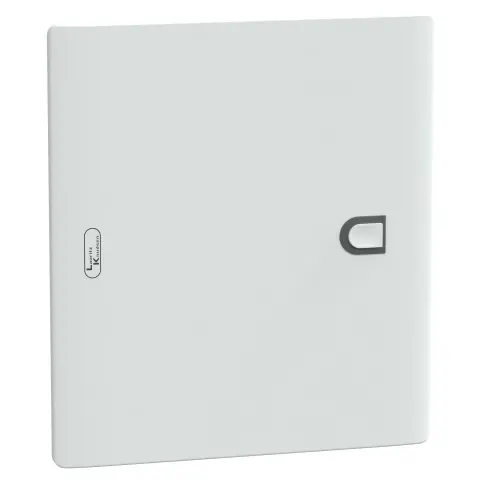
Layout of a well-dressed board
Order matters inside the enclosure. Incoming supply lands on a main isolator or MCB, then the RCCB (40 A, 30 mA for most homes) so all final circuits sit behind leakage protection, then the outgoing MCBs grouped logically: lighting ways together, socket ways together, heavy appliances last, each labelled in writing on the door card. Neutrals return to the neutral bar in the same order as their phases, earths to the earth bar, and loops never bypass the RCCB. Leave the door card honest; a mislabelled board is worse than an unlabelled one. This dressing costs the electrician an extra hour and repays it at every fault for the life of the house.
Spare ways: the cheapest future-proofing in construction
The delta between an 8 way and a 12 way board is a few hundred rupees and a few centimetres of wall. The delta between a full board and the circuit you want to add in five years, an EV charger, a second AC, a kitchen remodel, is a second enclosure, wall work, and a visit that costs more than the original board did. Plan 25 to 30 percent of ways empty on day one. If an EV is even a possibility, reserve two ways and ask for conduit provision to the parking spot now, while walls are open; the wire can come later. Spare ways also let protection evolve, such as splitting circuits across RCBOs later without replacing the enclosure.
Buying tips
- Compute ways as circuits + incomer devices + 25 to 30 percent spare, and round up to the next standard size. Nobody has ever regretted the bigger board.
- Metal double-door boards with dust protection suit Indian conditions; check the IP rating where the board faces a damp or open area.
- Buy the board and its switchgear as one branded system where possible; mixed-brand DIN devices fit mechanically but uniform brands keep ratings, curves and spares simple.
- Insist on a written door card mapping every way to its circuit, updated whenever anything changes.
- For three-phase homes, have the electrician document which phase feeds what; balanced phases and a known map turn every future fault into a five-minute isolation.
- Position the DB accessibly, near the entrance at adult height, never inside a wardrobe or behind the refrigerator; the day it matters, seconds count.
Frequently asked questions
What does 8 way or 12 way mean in a distribution board?
The number of single-module slots on the outgoing rail. Each single-pole MCB uses one way; wider devices like a double-pole RCCB use two or more. The usable circuit count is therefore the way count minus the width of incomer and protection devices.
How many ways do I need for a 2BHK?
Usually 8 to 12: two lighting circuits, two socket circuits, kitchen power, plus dedicated ways per AC and geyser, the RCCB's two ways, and spares. Buy 12 if the kitchen is appliance-heavy or an AC may be added later.
What is the difference between SPN and TPN distribution boards?
SPN boards serve single-phase (230 V) supplies with one phase busbar. TPN boards serve three-phase (415 V) supplies with three phase sections plus neutral, letting circuits balance across phases. Your electricity connection type decides which you need.
Should every AC and geyser have its own MCB?
Yes. Each fixed heavy appliance gets a dedicated circuit and way, sized to its load (commonly 20 to 25 A on 4 sq mm for ACs, similar for geysers). Sharing heavy appliances on one circuit trades a few hundred rupees for years of nuisance trips.
Can I add more ways to an existing full board?
Not to the enclosure itself; way count is fixed at manufacture. Options are replacing the board with a larger one or adding a second sub-board fed from the first, both costlier than having bought spare ways originally. Plan 25 to 30 percent spare from day one.
Where should the RCCB sit among the ways?
Immediately after the main isolator or incomer MCB, so every outgoing circuit passes through it. In larger TPN setups, either a four-pole RCCB at the incomer or separate RCCBs per phase group, chosen for discrimination so one leakage does not black out all three phases.
Compare MRP vs the Elume price across brands, with an extra 5% wholesale rate on 15+ units.
Browse the catalogue →