

 16332↓ 40% off1 / 2

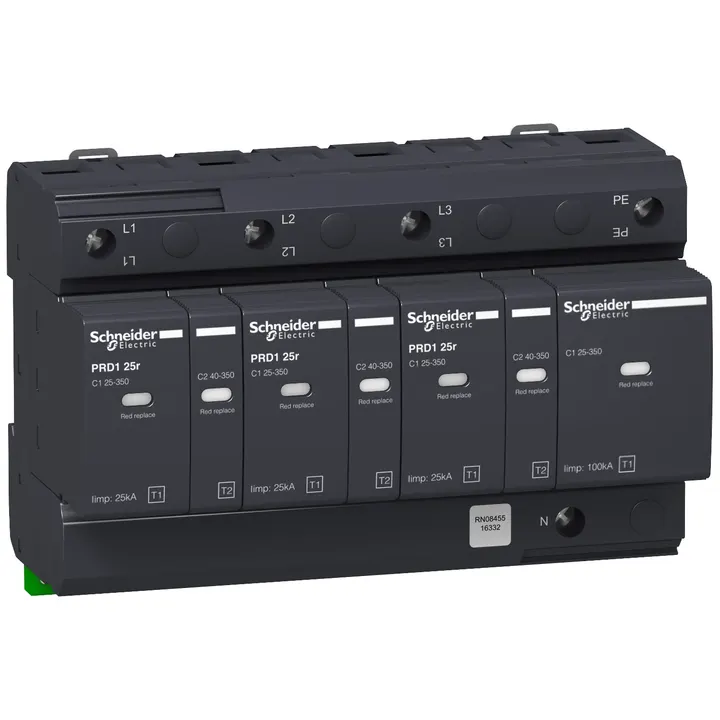
Schneider Acti9 PRD1 25r SPD · 3P+N
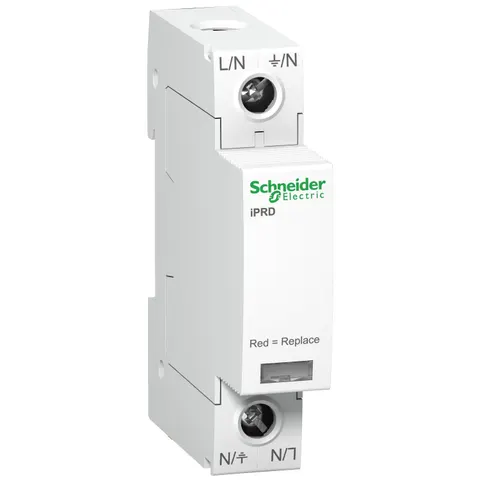
This Acti9 PRD1 product is a surge arrester with pluggable cartridge. It has 3P+N pole. The maximum continuous operating voltage is 350V (L-N or N-PE). It is available for TT or TN-S earthing system. It is a type 1 and type 2 surge arrester. It protects electrical installations against direct lightning strikes by finely clipping the lightning wave overvoltages. It is fitted with easy-to-replace withdrawable cartridges. The device has an end-of-life indication (white for correct operation, red at end of life) with remote signalling. The nominal discharge current (impulse 8-20 µs) is 25kA with a maximum of 40kA. The Uc maximum continuous operating voltage in differential mode (between phase and neutral) is 350VAC. The Uc maximum continuous operating voltage in common mode (between neutral and earth) is 350VAC. The maximum lightning current Iimp (impulse current 10-350 µs) is 25kA between L-N and 100kA between N-PE. The rated voltage network is 230VAC or 400VAC. The voltage protection level goes up to 1.5kV. The degree of protection is IK05 and IP20 on its terminals becoming IP40 once in modular enclosure. It can be mounted on DIN rail for modular installation. Its width is 16 modules
Which type of SPD should I use for my home - Type 1 or Type 2?
For most homes and apartments, a Type 2 SPD in the main DB is the standard choice. Type 1 or combined Type 1+2 is used at the service entrance of independent houses in lightning-prone areas or buildings with external lightning protection (SPDs are covered by IS 16463 (Part 11), identical to IEC 61643-11).
Does an SPD need earthing?
Yes. An SPD diverts surge energy to earth, so it works only with a proper, low-resistance earth connection kept as short as possible. Without good earthing it gives little or no protection.
Will an SPD protect against high voltage from neutral failure?
No. SPDs are designed for short transient surges from lightning and switching, not sustained overvoltage such as from a broken neutral or poor supply. For that, use a voltage protection relay, an over/under voltage protector or stabilisers for sensitive equipment.
How do I know when the SPD needs replacing?
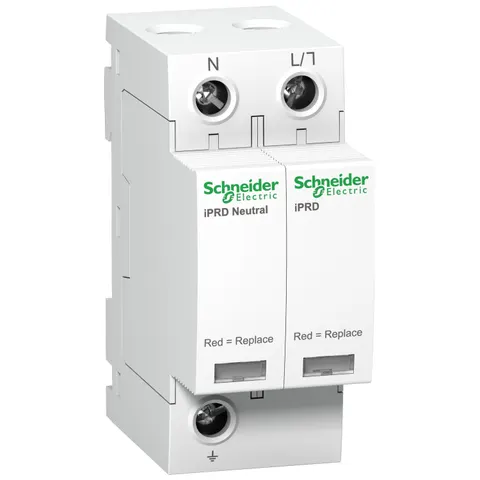
Most SPDs have an indicator window that turns from green to red when the protective element has reached end of life. Pluggable SPDs allow replacing only the cartridge; check the indicator periodically and after major thunderstorms.
Does an SPD need an MCB or fuse before it?
Yes, an SPD should have backup protection (MCB or fuse) as specified by the manufacturer, so a failed SPD can be safely disconnected without tripping the whole installation. The backup rating is usually listed in the SPD datasheet.
How many poles do I need for my supply?
The pole configuration of this SPD is 3P+N. A single-phase home typically uses a 1P+N or 2P SPD, and a three-phase supply uses 3P+N or 4P, so all live conductors are protected.
What do Imax, In and Up mean on an SPD?
Imax is the maximum surge current it can discharge once, In is the nominal current it can handle repeatedly, and Up is the voltage protection level (the let-through voltage), where lower is better. For 230 V homes, a Type 2 SPD with Imax around 40kA and a maximum continuous operating voltage (Uc) of 275 V or more is commonly used.