

 3KJ1126-4AA20-1AA0↓ 40% off1 / 2

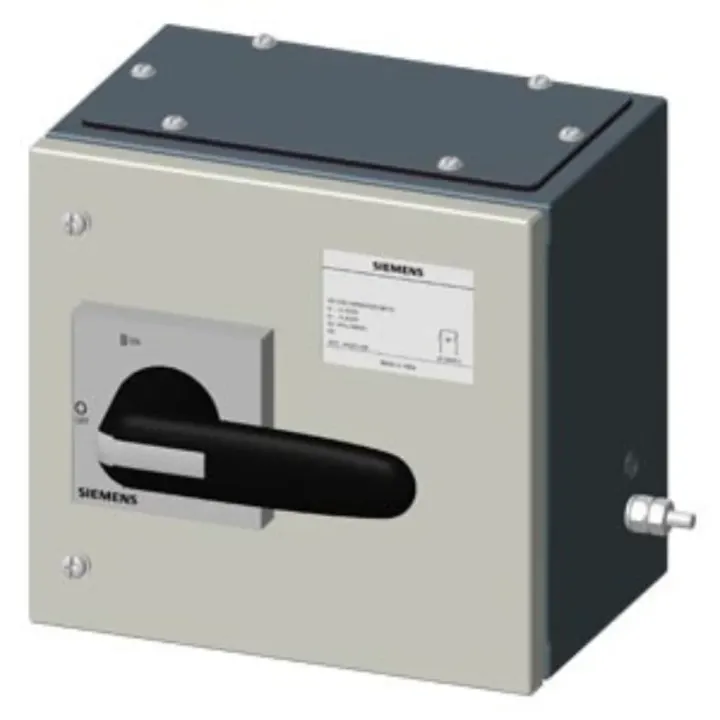
Siemens Sinova 3KJ Manual Onload Changeover Switch 63 A · 4 Pole · SS Enclosure · 415 V AC · 3KJ1126-4AA20-1AA0
Siemens Sinova 3KJ Manual Onload Changeover Switch 63 A (article 3KJ1126-4AA20-1AA0) is a changeover switch from Siemens, Sinova series, sold by Elume with a GST invoice and pan-India delivery. Key data: manufacturer product name SINOVA, onload changeover switches 3KJ1, manually operated, size 1, 4-pole, in enclosed execution Iu: 63 A, Ue AC: 415 V, Ie at AC-23 A at 415 V: 63 A, screw mounting, front operating mechanism, at the left end, complete unit with door operating mechanism, Plastic handle, grey and black colour, flat terminal, ampere/current rating 63 A, no. of poles 4 Pole, type SS Enclosure, rated voltage (v) 415V AC. Priced at the Siemens India list price of 2026 (MRP before GST Rs 23,215), GST included in the price shown.
Which changeover switch do I need for a generator at home?
Use a changeover switch rated at least equal to your main incomer, with poles matching the supply (2 pole for single-phase, 4 pole for three-phase) so the neutral is also switched. This prevents generator power feeding back into the grid, which is dangerous for line workers, and installation should be done by a licensed electrician.
What is the difference between on-load and off-load changeover?
An on-load changeover switch is designed to transfer between mains and generator while current is flowing, while an off-load type must only be operated after the load is switched off. On-load types are safer and more convenient for most homes and shops; check the load rating on the product.
What is the difference between manual changeover and ATS?
A manual changeover needs someone to operate the handle when power fails, while an ATS (automatic transfer switch) senses mains failure and switches to the generator automatically, often also starting the DG set. ATS is used where unattended or quick changeover is needed.
Why does a changeover switch have a centre OFF position?
The centre OFF position ensures the load is fully disconnected from both sources before connecting to the other, so mains and generator can never be connected together. It is also used to isolate the load safely for maintenance.
Can I use a changeover switch for an inverter?
Yes, a changeover switch is often used to select between inverter output and mains, or to bypass the inverter during servicing. Size it for the circuits it will carry and make sure inverter output and mains are never paralleled.