🚚 Free delivery over ₹4,000 pan-India · we also ship worldwide · Buying in bulk? Get a quote in 24 hours →


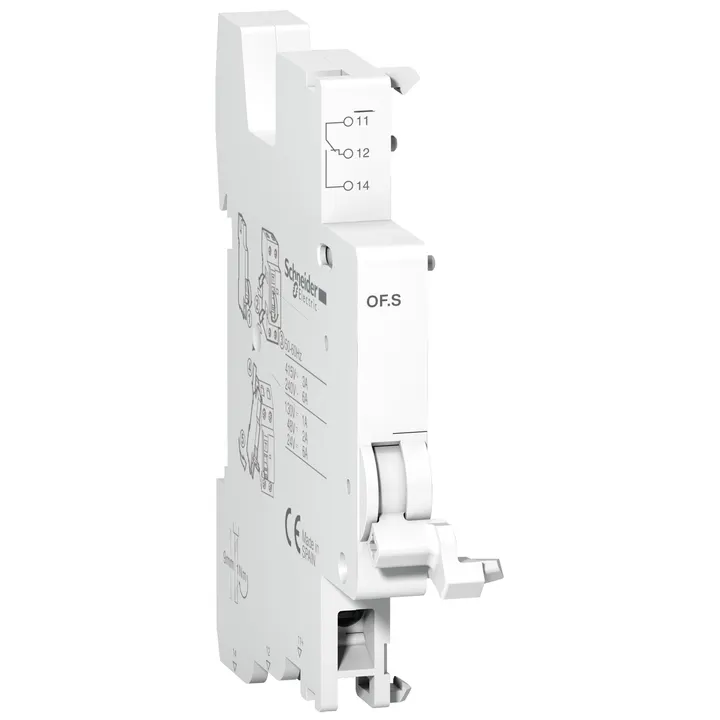 A9N26923↓ 40% off
BrandSchneider
CategorySwitchgear
SpecificationActi 9 · auxiliary contact OFS 1 O/C for RCCB
Brand SKUA9N26923
AvailabilityIn stock · ships in 24h
Delivery8 to 15 business days after dispatch
Schneider· In stock
Visit the Schneider store
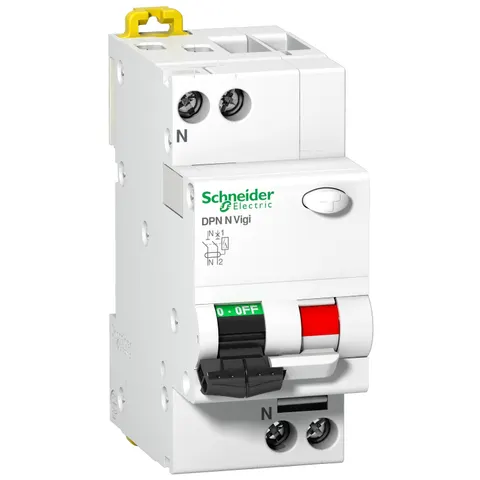
Schneider Acti9 OFS OC Contact · Acti 9 · auxiliary contact OFS 1 O/C for RCCB · A9N26923
$115.12/pc-40%
$191.87
Wholesale · 15+ units
$109.37 /pc
Add to cart
Buy now
Delivery in 8 to 15 business days after dispatch
Buying in bulk? Ask our Export desk for a quote.
🏷️
100% genuine
Brand-authorised stock, sourced through authorised channels
🧾
Export invoice
Every international order ships with an export invoice for customs
🌍
Worldwide delivery
Dispatched from Ghaziabad, India · fee by weight, shown at checkout
📦
Wholesale built in
Wholesale price at 15+ units: $109.37/pc on this product, applied automatically
This Acti9 auxiliary is a contact OFS for RCCB. It is dedicated to Acti9 IDc, iID products. It comes with 1 changeover contact indicating the open or closed position (OF). It provides a remote position open/close and/or fault tripping indication of the associated device. The width in 9mm pitches is 1. The product color is white (RAL9003). The dimensions are (W) 9mm x (H) 85.5mm x (D) 78.5mm. Product weight is 33g. The operating temperature is -35°C to +70°C. The storage temperature is -40°C to + 85°C. This product complies with EN/IEC 60947-5-1 standard.
As published by Schneider. Verify critical parameters against the datasheet before specifying.
Schneider Schneider Acti9 OFS OC Contact · Acti 9 · auxiliary contact OFS 1 O/C for RCCB · A9N26923 · A9N26923
Rated current3 A
Ingress protectionIP20
Reference standardEN/IEC 60947-5-1
Net weight0.033 kg
ColourWhite
Device typeResidual current circuit breaker (RCCB)
BrandSchneider
Brand SKUA9N26923
ELINEDFM2JPFG6
Sold asPer pc
Depth78.5 mm
Width9 mm
Height85.3 mm
StandardsEN/IEC 60947-5-1
9 mm pitches1
Mounting modeFixed
Tropicalisation2 conforming to EN/IEC 60947-5-1
Mounting supportDIN rail
Pollution degree3 conforming to EN/IEC 60947-5-1
range of productActi9
Device short nameOFS
Relative humidity0.95 % at 55 °C
Tightening torque1 N.m
[In] rated currentAC-12 3 A at 380...415 V, AC 50/60 Hz · AC-12 6 A at 220...240 V, AC 50/60 Hz · DC-12 1 A at 130 V, DC · DC-12 1.5 A at 60 V, DC · DC-12 2 A at 48 V, DC · DC-12 6 A at 24 V, DC
Range compatibilityActi9 RCCB-ID 125A · Acti9 ID C40 · Acti9 IDc · Acti9 ITG40
Wire stripping length9 mm
Connections - terminalsClamp terminal (bottom): 2 cable(s) 1.5 mm² - flexible · Clamp terminal (bottom): 1 cable(s) 0.5…2.5 mm² - rigid · Clamp terminal (bottom): 2 cable(s) 1.5 mm² - flexible with ferrule
IP degree of protectionIP20 conforming to EN/IEC 60947-5-1
Product or component typeOC contact
Signal contacts composition1 C/O
Ambient air temperature for storage-40…85 °C
Ambient air temperature for operation-35…70 °C
Comb busbar and distribution block compatibilityTop: YES
Ratings as published by Schneider (se.com). Verify critical parameters against the datasheet before specifying.
Other Schneider ranges and models in this category, closest in price to this one.
Read: Contactor Sizing for 400 V and 415 V Motors: kW to Amps, AC-3 Ratings and Overload Relays →
What size contactor do I need for a 7.5 kW motor?
A 7.5 kW three-phase motor at 400 V draws about 14.5 A, so a contactor rated at least 16 to 18 A at AC-3 is the usual choice, with an overload relay set to the nameplate current.
What is the difference between AC-1 and AC-3?
AC-1 is the rating for resistive loads such as heaters; AC-3 is the rating for switching squirrel-cage motors in normal duty. Motors are always sized on the AC-3 figure, which is lower.
How many amps per kW for a three-phase motor?
At 400 V, roughly 2 A per kW for small motors, falling towards about 1.8 A per kW above 30 kW, because larger motors run at a better power factor and efficiency. Use the nameplate for the exact figure.
No reviews yet