
🚚 Free delivery over ₹4,000 pan-India · we also ship worldwide · Buying in bulk? Get a quote in 24 hours →
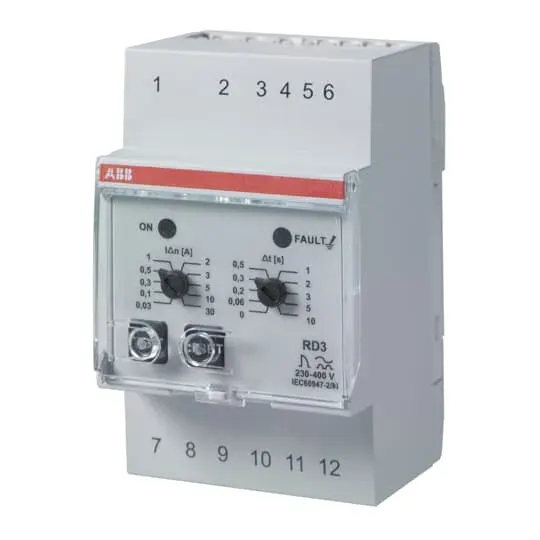
ABB RD3P Residual Current Monitor · 2CSJ203001R00022CSJ203001R0002↓ 2% off MRP
BrandABB
CategorySwitchgear
SpecificationType A · 230 ... 400 V AC
Brand SKU2CSJ203001R0002
AvailabilityOut of stock
DeliveryPan-India · 7 working days
ABB· Out of stock
Visit the ABB store

ABB RD3P Residual Current Monitor · 2CSJ203001R0002

₹12,877/pcincl. GST-2%
₹10,913 + 18% GST · MRP ₹13,140
Out of stock

We list this so you can see the spec and our price, but it cannot be ordered right now. Email info@elumenuvo.com and we will source it for you.

💳 30 Day credit facility available launching soon - join waitlist.

ABB RD3P Residual Current Monitor · 2CSJ203001R0002: Elume price today ₹12,877 per pc incl. GST, 2% below the ₹13,140 MRP. The price has held steady for the last 30 days.

Price history
Elume price over time, day by day. Market comparison appears once we track this item.
25 May to 22 Nov
₹14,060₹13,396₹12,733₹12,069₹11,406₹13,140₹12,877
May 26Jun 26Aug 26Sep 26Oct 26Nov 26Nov 26
Elume today
₹12,877
MRP
₹13,140
Lowest in view · 10 Aug
₹12,264
Highest in view · 3 Oct
₹12,877
🏷️
100% genuine
Brand-authorised stock with full manufacturer warranty
🧾
GST invoice
Tax invoice on every order · GST billing with tax split
🚚
Pan-India delivery
7 working days to your location
📦
Wholesale built in
Wholesale price at 15+ units: ₹12,233/pc on this product, applied automatically

The RD3 series of electronic residual current relays provides residual current protection and monitoring functions. This device can be used in conjunction with all MCBs of S200 series and Tmax range moulded case devices up to T5, for industrial installations.
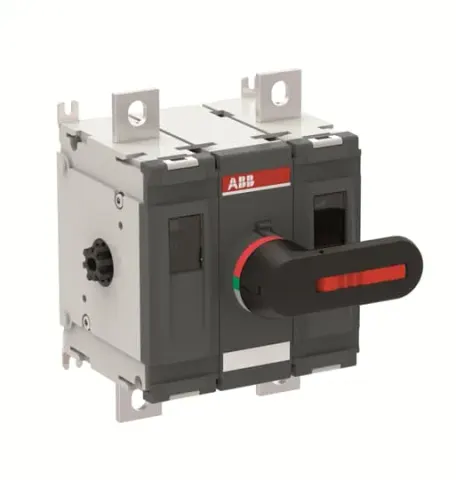
As published by ABB. Verify critical parameters against the datasheet before specifying.
ABB ABB RD3P Residual Current Monitor · 2CSJ203001R0002 · 2CSJ203001R0002
RCCB typeType A
Rated voltage230 ... 400 V AC
Frequency50 … 60 Hz
Reference standardIEC EN 60947-2 Ann M
Net weight0.223 kg
Device typeMiniature circuit breaker (MCB)
BrandABB
Brand SKU2CSJ203001R0002
ELINEGHRKHPFD9
Sold asPer pc
Ratings as published by ABB (abb.com product data, datasheet 9AKK107046A0424). Verify critical parameters against the datasheet before specifying.
The letter after the sensitivity says which earth-fault currents the breaker can sense. Every type trips on a plain AC leak; the higher types also catch the leaks electronics produce. Same rating, different type, different price.
Type AC
Senses sinusoidal AC leakage only. Enough for lighting, geysers, heaters and plain socket circuits.
Type A
THIS UNIT
Senses AC and pulsating DC leakage, the kind inverter air conditioners, washing machines, UPS units, solar inverters and EV chargers produce. A Type AC unit can stay blind to those faults. Covers everything Type AC does. The safe default for a modern home.
Type A APR
Type A with high immunity to nuisance tripping: a short delay rides through lightning surges and switching transients. For circuits where a false trip costs more than the delay: servers, refrigeration, long cable runs.
Sensitivity is a separate choice: 30 mA protects people from shock; 100 mA and 300 mA units are for fire protection or as an upstream main. Type definitions per IEC/EN 61008 and 61009.
Read: Contactor Sizing for 400 V and 415 V Motors: kW to Amps, AC-3 Ratings and Overload Relays →
What size contactor do I need for a 7.5 kW motor?
A 7.5 kW three-phase motor at 400 V draws about 14.5 A, so a contactor rated at least 16 to 18 A at AC-3 is the usual choice, with an overload relay set to the nameplate current.
What is the difference between AC-1 and AC-3?
AC-1 is the rating for resistive loads such as heaters; AC-3 is the rating for switching squirrel-cage motors in normal duty. Motors are always sized on the AC-3 figure, which is lower.
How many amps per kW for a three-phase motor?
At 400 V, roughly 2 A per kW for small motors, falling towards about 1.8 A per kW above 30 kW, because larger motors run at a better power factor and efficiency. Use the nameplate for the exact figure.
Is 30mA or 100mA RCCB right for home?

For protecting people from shock, use 30mA on circuits feeding sockets, bathrooms, kitchens and outdoor points. 100mA or 300mA RCCBs are mainly for fire protection and are often used upstream as a main device, with 30mA protection on the final circuits.

Does an RCCB need an MCB with it?

Yes. An RCCB only detects earth leakage and does not protect against overload or short circuit, so it must be backed up by an MCB or fuse of a rating given in the manufacturer's data (RCCBs are covered by IS 12640 (Part 1)).

Why does my RCCB keep tripping?

Common causes are genuine leakage from a faulty appliance (often a geyser element, pump or washing machine), moisture in wiring, neutral of one circuit being shared with another, or many electronic loads adding up their small leakages. Switch off all MCBs and turn them on one by one to find the culprit circuit, and have an electrician test insulation; never bypass the RCCB.

What is the difference between Type AC and Type A RCCB?

Type AC detects only sinusoidal AC leakage, while Type A also detects pulsating DC leakage produced by electronic loads like inverter ACs, washing machines, induction cooktops and LED drivers. Type A is the safer choice for modern homes with many electronic appliances; EV chargers and VFDs may need Type B or a charger with built-in DC detection.

How often should I press the test button?

Manufacturers commonly recommend pressing the test button regularly, often once a month; check the interval in the product's instructions. The RCCB should trip immediately, and if it does not, have an electrician check and replace it.

What current rating RCCB do I need - 25A, 40A or 63A?

The RCCB's rated current should be equal to or higher than the MCB or main switch feeding it, because it must carry the full load current. Many Indian homes use 40A or 63A RCCBs at the incomer; for a single circuit, 25A is common.

No reviews yet