

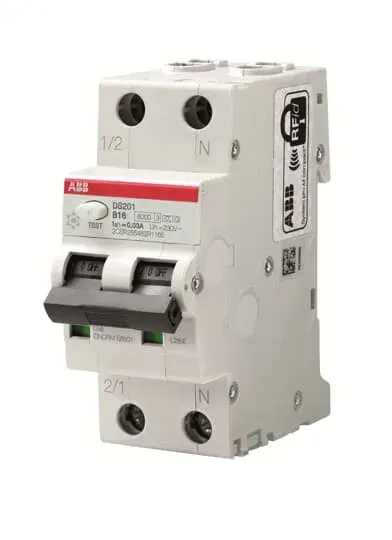
 2CSR275475R2404↓ 53% off MRP

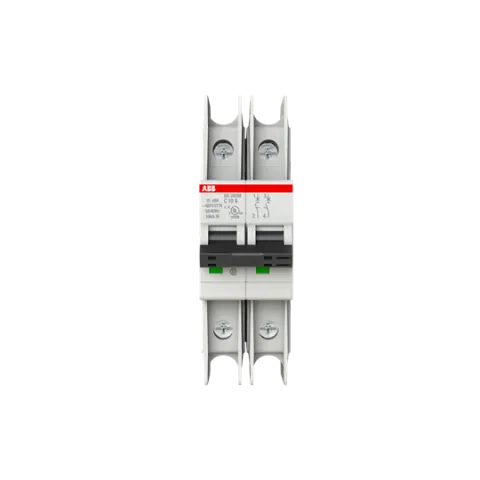
ABB Residual Current Circuit Breaker with Overcurrent Protection DSB201 M - 1P+N - 100 mA - 40 A - C - Type A · 2CSR275475R2404
NEW added this week- Secured by Razorpay · UPI, cards, net banking, wallets
- GST invoice, claim input tax credit
- Tracked delivery, 5 to 7 working days
ABB Residual Current Circuit Breaker with Overcurrent Protection DSB201 M - 1P+N - 100 mA - 40 A - C - Type A · 2CSR275475R2404: Elume price today ₹8,688 per pc incl. GST, 53% below the ₹18,407 MRP. The price has held steady for the last 30 days.
DSB201 M A-C40/0.1 - Residual Current Circuit Breaker with Overcurrent Protection
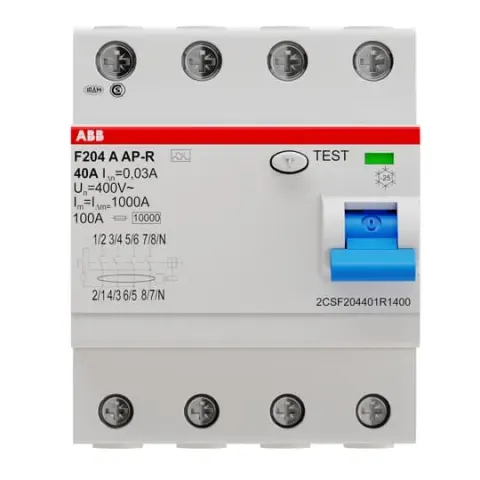
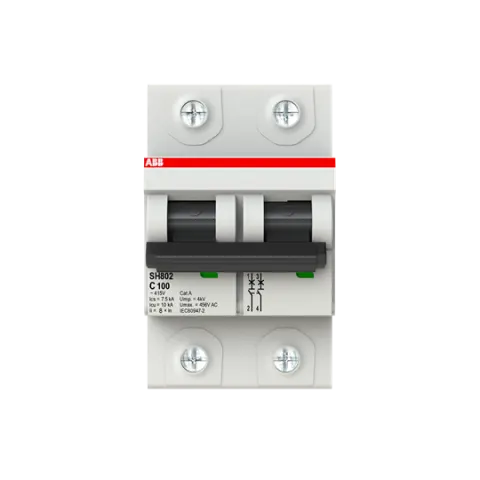
Is 30mA or 100mA RCCB right for home?
For protecting people from shock, use 30mA on circuits feeding sockets, bathrooms, kitchens and outdoor points. 100mA or 300mA RCCBs are mainly for fire protection and are often used upstream as a main device, with 30mA protection on the final circuits.
Does an RCCB need an MCB with it?
Yes. An RCCB only detects earth leakage and does not protect against overload or short circuit, so it must be backed up by an MCB or fuse of a rating given in the manufacturer's data (RCCBs are covered by IS 12640 (Part 1)).
Why does my RCCB keep tripping?
Common causes are genuine leakage from a faulty appliance (often a geyser element, pump or washing machine), moisture in wiring, neutral of one circuit being shared with another, or many electronic loads adding up their small leakages. Switch off all MCBs and turn them on one by one to find the culprit circuit, and have an electrician test insulation; never bypass the RCCB.
What is the difference between Type AC and Type A RCCB?
Type AC detects only sinusoidal AC leakage, while Type A also detects pulsating DC leakage produced by electronic loads like inverter ACs, washing machines, induction cooktops and LED drivers. Type A is the safer choice for modern homes with many electronic appliances; EV chargers and VFDs may need Type B or a charger with built-in DC detection.
How often should I press the test button?
Manufacturers commonly recommend pressing the test button regularly, often once a month; check the interval in the product's instructions. The RCCB should trip immediately, and if it does not, have an electrician check and replace it.
What current rating RCCB do I need - 25A, 40A or 63A?
The RCCB's rated current should be equal to or higher than the MCB or main switch feeding it, because it must carry the full load current. Many Indian homes use 40A or 63A RCCBs at the incomer; for a single circuit, 25A is common.