

 ↓ 48% off MRP1 / 2

Polycab Optima+ House Wire · LF FR · 2.5 sq mm · 180 m · Blue
- Secured by Razorpay · UPI, cards, net banking, wallets
- GST invoice, claim input tax credit
- Tracked delivery, 5 to 7 working days
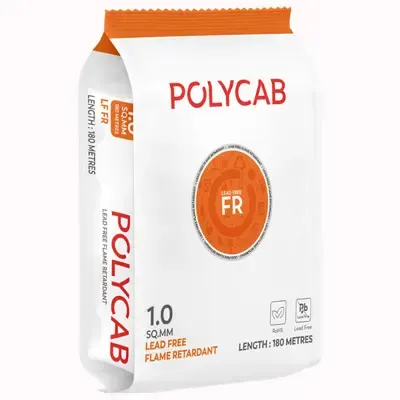
Polycab LF FR 180 m
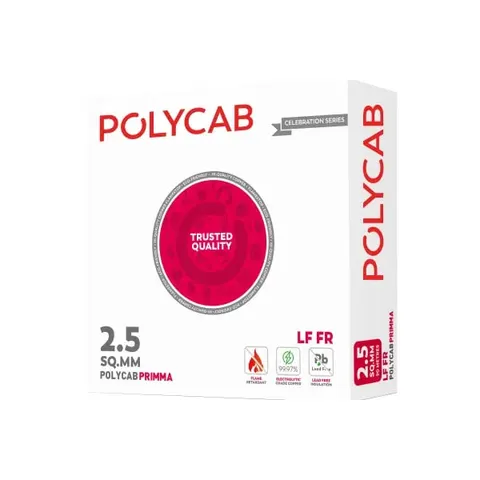
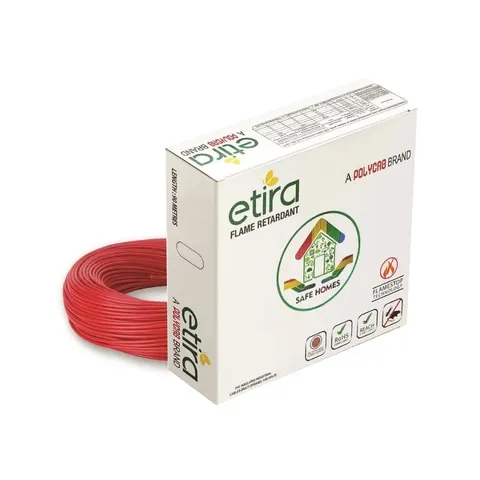
Polycab LF FR 180 m is a lead free flame retardant house wire supplied as a 180 m coil in pouch packaging, with FLAMESTOP technology and rodent protection.
- Lead free flame retardant (LF FR) PVC insulation
- Maximum operating temperature 70 °C
- 180 m coil in pouch packaging
- Single core, 1100 V grade, IS 694:2010
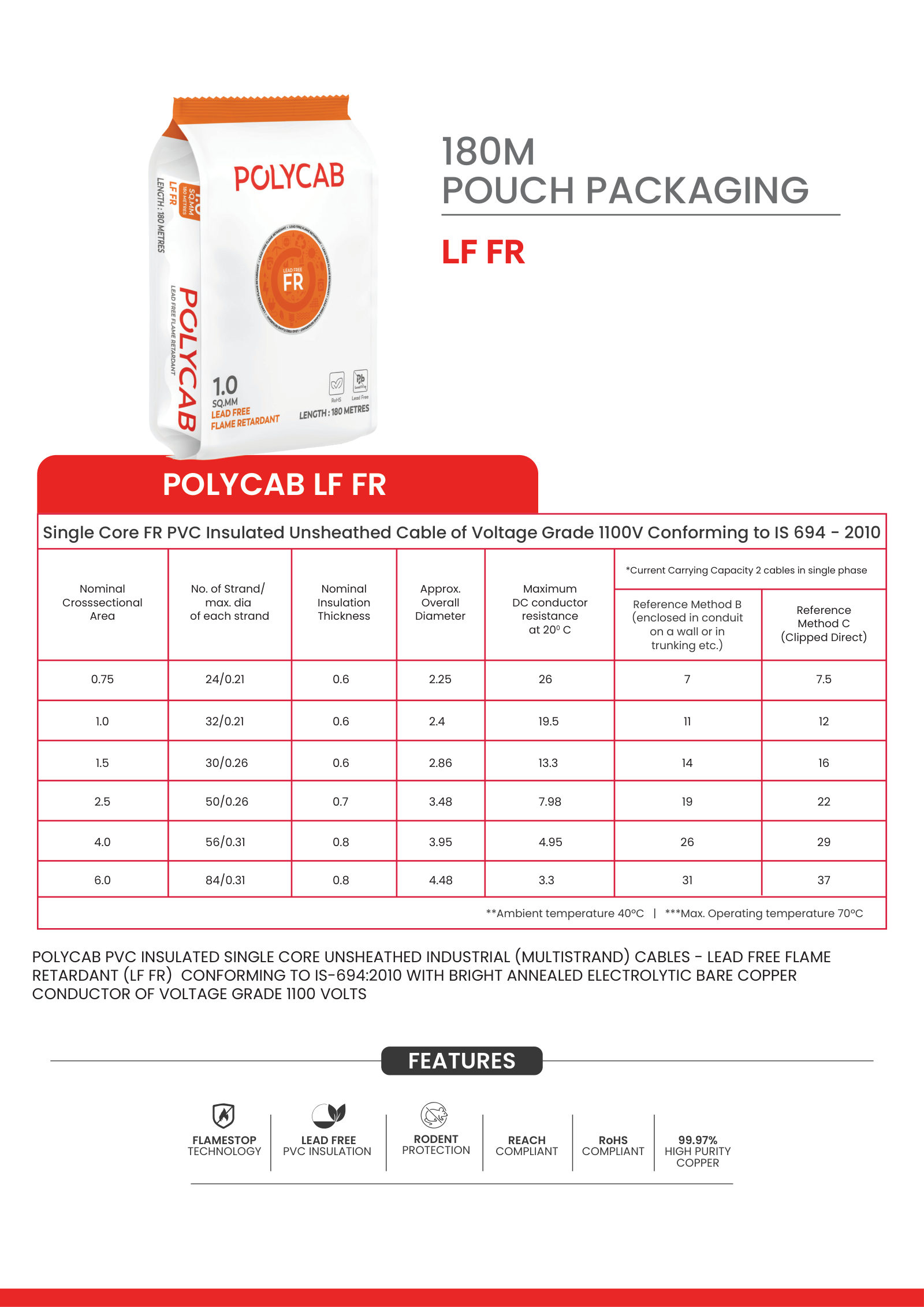 Open the catalogue page ›Polycab House Wires & Cables Catalogue, March 2025
Polycab Optima+ House Wire · LF FR · 2.5 sq mm · 180 m · Blue: Elume price today ₹10,592 per coil incl. GST, 48% below the ₹20,370 MRP. The price has held steady for the last 30 days.
Polycab LF FR flame retardant and lead free wires bring together the highest quality raw materials for a high performance wire. These wires have a high degree of flame retardance, abrasion and chemical resistance and are made using electrolytic grade copper of the highest quality.
- Flame retardant
- Lead free PVC insulation
- Rodent protection
- High abrasion resistant
- 99.97% high purity copper
- RoHS compliant
- REACH complaint
Technical data · Optima+
FR vs FRLS vs HFFR / ZHFR - which wire should I buy for my home?
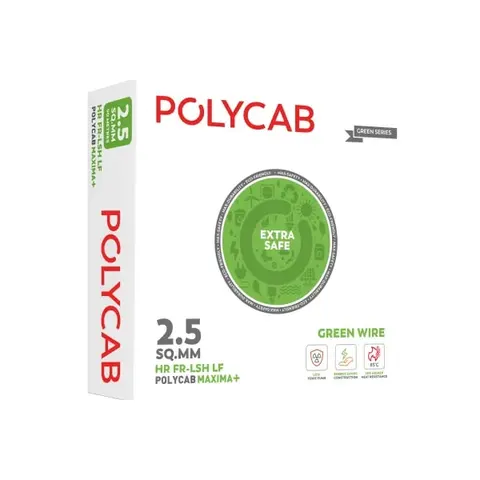
FR (flame retardant) slows the spread of fire; FRLS also gives off much less smoke; HFFR / ZHFR (halogen free) additionally avoids toxic, corrosive halogen gases when it burns. FRLS is a sensible minimum for homes, and halogen-free wire is worth it for bedrooms, escape routes and enclosed spaces if the budget allows.
Which wire size should I use for lights, sockets, AC and geyser?
Common practice in Indian homes is 1.5 sq mm for lights and fans, 2.5 sq mm for 6A/16A socket circuits, 4 sq mm on a dedicated circuit for a 1.5 ton AC or geyser, and 6 sq mm or more for the main supply to the distribution board. Long runs and higher loads need a bigger size, so have a licensed electrician confirm sizes against the MCB ratings.
What size is this wire and what is it suitable for?
The listed size of this wire is 2.5 sq mm. As a rule of thumb, 1-1.5 sq mm suits lighting, 2.5 sq mm suits socket circuits, 4 sq mm suits AC or geyser circuits and 6 sq mm and above suits mains and sub-mains; always match the wire to the MCB rating and have a licensed electrician confirm.
How can I check the length of a wire coil?
The declared length is printed on the pack, and many brands also print running metre marks on the insulation, so you can compare the start and end readings.
How do I check the wire is genuine and ISI marked?
Look for the ISI mark with a CM/L licence number printed on the wire and the pack. You can verify the licence number on the BIS Care app; PVC-insulated house wires are made to IS 694.
Which colour wire should be used for phase, neutral and earth?
In Indian fixed wiring, red is used for phase (with yellow and blue for the other phases on three-phase supply), black for neutral and green or green-yellow for earth. Sticking to these colours makes future maintenance safer and is what electricians expect.
Is copper wire better than aluminium for house wiring?
Yes, copper is the standard for internal house wiring because it carries more current for the same size, is more flexible and makes more reliable joints. Aluminium is mainly used for larger supply and armoured cables.
Does a higher temperature rating (HR, 85 or 105 deg C) matter?
Standard PVC wire is rated for 70 deg C conductor temperature, while heat-resistant grades handle higher temperatures and age more slowly under heavy, continuous loads. It is useful for kitchens, AC and geyser circuits and hot roof slabs, but it does not replace choosing the correct wire size.