
🚚 Free delivery over ₹4,000 pan-India · we also ship worldwide · Buying in bulk? Get a quote in 24 hours →
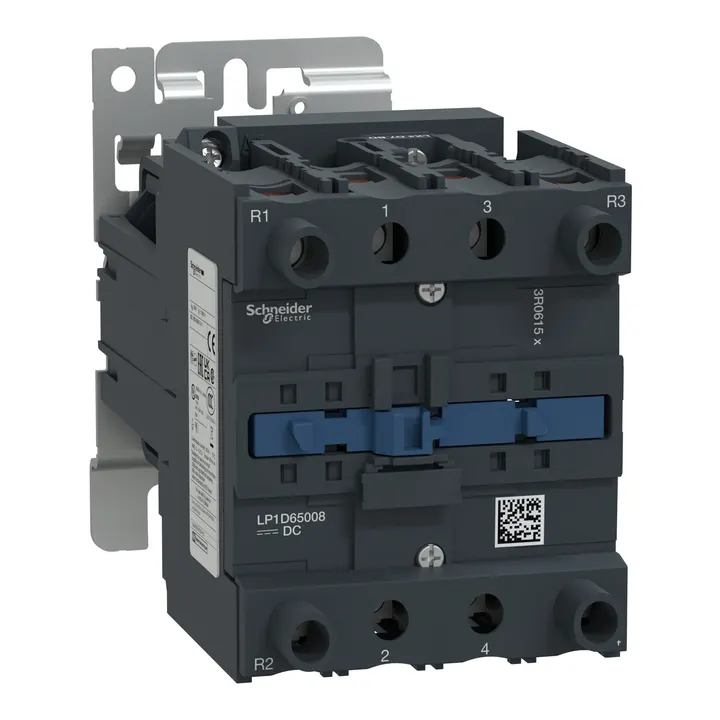
Schneider TeSys LP1D Power Contactor · 4P · 80 A AC-3 · 2 NO + 2 NC aux · 110 V DC coil · LP1D65008FDLP1D65008FD↓ 40% off1 / 5
BrandSchneider
CategoryIndustrial Control
Specification4P · 80 A AC-3 · 2 NO + 2 NC aux · 110 V DC coil
Brand SKULP1D65008FD
AvailabilityIn stock · ships in 24h
Delivery8 to 15 business days after dispatch
Schneider· In stock
Visit the Schneider store

Schneider TeSys LP1D Power Contactor · 4P · 80 A AC-3 · 2 NO + 2 NC aux · 110 V DC coil · LP1D65008FD

Rating: 80 A AC-3
Coil: 110 V DC coil
$465.44/pc-40%
$775.73
Wholesale · 15+ units
$442.17 /pc
Add to cart
Buy now
Delivery in 8 to 15 business days after dispatch
Buying in bulk? Ask our Export desk for a quote.
$465.44 /pc
Delivery in 8 to 15 business days
🏷️
100% genuine
Brand-authorised stock, sourced through authorised channels
🧾
Export invoice
Every international order ships with an export invoice for customs
🌍
Worldwide delivery
Dispatched from Ghaziabad, India · fee by weight, shown at checkout
📦
Wholesale built in
Wholesale price at 15+ units: $442.17/pc on this product, applied automatically

TeSys Deca contactor, 4 poles (2NO/2NC),for load control applications in category AC-1. and for non-inductive load control applications up to 80A@60℃. It provides a 110V DC coil,without built-in auxiliary contact, connection by screw clamp terminals. For operating rates until 3600 cycles/hour and environments until 60°C, it procures reliability and durability to standard applications. Very compact (55mm width), DIN-rail mounting or screw fixing. Multi standards certified (IEC, UL, CSA, CCC, EN), Green Premium compliant (RoHS/REACh).
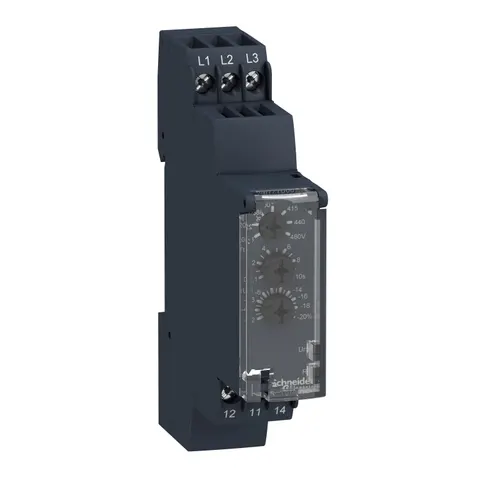
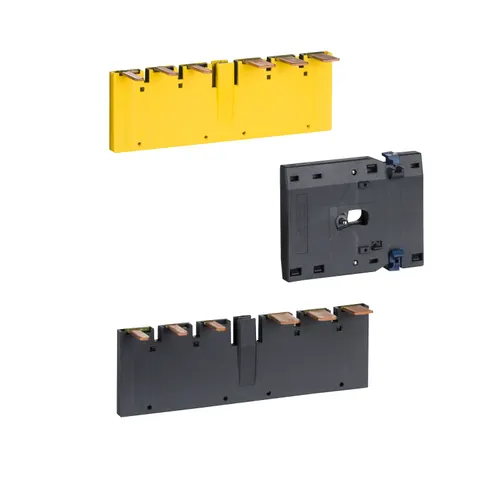
As published by Schneider. Verify critical parameters against the datasheet before specifying.
Schneider Schneider TeSys LP1D Power Contactor · 4P · 80 A AC-3 · 2 NO + 2 NC aux · 110 V DC coil · LP1D65008FD · LP1D65008FD
Poles4P (FP)
Rated current80 A
Ingress protectionIP20 front face
Reference standardCSA C22.2 No 14
coil voltage110 V DC
Net weight2.22 kg
BrandSchneider
Brand SKULP1D65008FD
ELINEMRR622MRK
Sold asPer pc
RangeTeSys
StandardsCSA C22.2 No 14 · EN 60947-4-1 · EN 60947-5-1 · IEC 60947-4-1 · IEC 60947-5-1 · UL 60947-4-1
Time constant75 ms
Operating time4...19 ms opening · 12...26 ms closing
Coil technologyBuilt-in bidirectional peak limiting diode suppressor
Fire resistance850 °C conforming to IEC 60695-2-1
Flame retardanceV1 conforming to UL 94
Mounting supportPlate · Rail
Pollution degree3
Protective coverWith
Range of productTeSys Deca Advanced
Average impedance1.5 mOhm - Ith 80 A 50 Hz for power circuit
Device short nameLP1D
Inrush power in W22 W (at 20 °C)
Poles description4P
Tightening torquePower circuit: 8 N.m - on screw clamp terminals - cable 25…35 mm² hexagonal screw head 4 mm · Control circuit: 1.7 N.m - on screw clamp terminals - with screwdriver flat Ø 6 mm · Control circuit: 1.7 N.m - on screw clamp terminals - with screwdriver Philips No 2 · Power circuit: 5 N.m - on screw clamp terminals - cable 1…25 mm² hexagonal screw head 4 mm · Control circuit: 1.7 N.m - on screw clamp
Compatibility codeLP1D
Operating altitude0...3000 m
Control circuit typeDC DC standard
Overvoltage categoryIII
Utilisation categoryAC-1
Contactor applicationResistive load
Electrical durability1.5 Mcycles 80 A AC-1 at Ue <= 440 V
Mechanical durability10 Mcycles
Associated fuse rating125 A gG at <= 690 V coordination type 1 for power circuit · 125 A gG at <= 690 V coordination type 2 for power circuit
Maximum operating rate3600 cyc/h at 60 °C
Product certificationsUL · CSA · CCC · EAC · UKCA · CB · DNV-GL · RINA · BV · LROS (Lloyds register of shipping)
Connections - terminalsPower circuit: screw clamp terminals 1 2.5…25 mm² - cable stiffness: flexible without cable end · Power circuit: screw clamp terminals 2 2.5…16 mm² - cable stiffness: flexible without cable end · Power circuit: screw clamp terminals 1 2.5…25 mm² - cable stiffness: flexible with cable end · Power circuit: screw clamp terminals 2 2.5…10 mm² - cable stiffness: flexible with cable end · Power circuit:
IP degree of protectionIP20 front face conforming to IEC 60529
Rated breaking capacity1000 A at 440 V for power circuit conforming to IEC 60947
Pole contact composition2 NO + 2 NC
Safety reliability levelB10d = 1369863 cycles contactor with nominal load conforming to EN/ISO 13849-1 · B10d = 20000000 cycles contactor with mechanical load conforming to EN/ISO 13849-1
Product or component typeContactor
Irms rated making capacity1000 A at 440 V for power circuit conforming to IEC 60947
Power dissipation per pole9.6 W AC-1
[Uc] control circuit voltage110 V DC
[Ui] rated insulation voltagePower circuit: 690 V conforming to IEC 60947-4-1 · Power circuit: 600 V CSA certified · Power circuit: 600 V UL certified
Control circuit voltage limits0.1...0.3 Uc (-40…55 °C):drop-out DC · 0.85...1.1 Uc (-40…55 °C):operational DC
Hold-in power consumption in W22 W at 20 °C
[Ie] rated operational current80 A (at <60 °C) at <= 440 V AC AC-1 for power circuit
[Ue] rated operational voltagePower circuit: <= 1000 V AC 25...400 Hz
[Uimp] rated impulse withstand voltage6 kV conforming to IEC 60947
[Icw] rated short-time withstand current110 A 40 °C - 10 min for power circuit · 260 A 40 °C - 1 min for power circuit · 520 A 40 °C - 10 s for power circuit · 900 A 40 °C - 1 s for power circuit
[Ith] conventional free air thermal current80 A (at 60 °C) for power circuit
Permissible ambient air temperature around the device-40…60 °C · 60…70 °C with derating
Ratings as published by Schneider (se.com). Verify critical parameters against the datasheet before specifying.
How do I choose a contactor for my motor?

Select by the contactor's AC-3 current (or kW) rating at your supply voltage, which should be at least the motor's full-load current from the nameplate. Do not go by the higher AC-1 rating, which applies only to resistive loads (contactors are covered by IS/IEC 60947-4-1).

What is the difference between AC-1 and AC-3 rating?

AC-1 is for non-inductive or slightly inductive loads like heaters, while AC-3 is for starting and stopping squirrel cage motors. The same contactor has a much lower AC-3 rating than AC-1, and AC-4 (inching or plugging) is even more demanding.

Does a contactor protect the motor?

No. A contactor only switches the motor on and off; overload protection needs a thermal overload relay and short-circuit protection needs an MPCB, MCB, MCCB or fuses upstream.

Why is my contactor humming or chattering?

Common causes are low or fluctuating control voltage, a wrong coil voltage, dust or rust on the magnet faces, or a broken shading ring. Check the supply at the coil terminals first, then clean or replace the contactor if needed.

How many auxiliary contacts does this have and can I add more?

Most contactors have built-in auxiliary contacts (NO and/or NC) for holding and interlocking circuits, and many allow add-on auxiliary blocks on the front or side. Check the contact configuration and add-on compatibility in the product details.

How many contactors do I need for a star-delta starter?

A star-delta starter uses three contactors (main, delta and star), a star-delta timer and an overload relay. The main and delta contactors are typically sized at about 58% of the motor current and the star contactor smaller, as per the manufacturer's selection table.

No reviews yet