

Surge Protection for Homes: SPDs, Spike Guards and What Actually Works
- Surges are microsecond voltage spikes from lightning and grid switching; they age electronics invisibly until something dies for no reason.
- Real protection is layered: a Type 2 SPD in the distribution board absorbs the big hits, plug-in spike guards mop up what remains at sensitive devices.
- A spike guard alone cannot absorb a serious surge; a DB-level SPD alone still lets small leftovers reach delicate electronics. Use both.
- A stabilizer is not surge protection: it corrects slow voltage drift, not microsecond spikes.
Every monsoon, service centres fill with dead TV boards, router adapters and inverter AC PCBs that all failed for no visible reason. The reason is usually a surge: a spike of thousands of volts lasting microseconds, from lightning somewhere on the network or from the grid switching large loads. Nothing trips, nothing smells; the electronics just age in fast-forward until one spike too many ends them.
Protection against this is cheap and layered, and most Indian homes have only the weakest layer or none. This guide explains what a surge protection device does, why the distribution board is where real protection lives, and how plug-in spike guards fit as the second layer rather than the whole answer.
What a surge is, and why breakers ignore it
An MCB trips on sustained overcurrent and an RCCB on earth leakage; both act in milliseconds. A surge is over in MICROseconds, a thousand times faster than any breaker mechanism can move, which is why a fully protected board full of breakers does nothing for surges. Surge protection works differently: an SPD contains metal-oxide varistors that are insulators at 230 V but become conductors at surge voltage, diverting the spike to earth before it travels further. This is also why good earthing is a prerequisite: the SPD needs somewhere to send the energy.
Layer 1: the Type 2 SPD in your distribution board
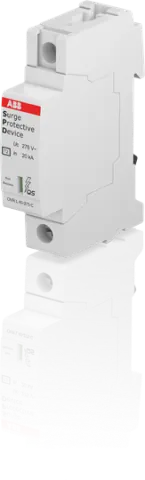
The workhorse of home surge protection is a Type 2 SPD mounted on the DIN rail right after the main breaker, protecting every circuit in the house at once. For single-phase homes, a unit like this ABB OVR T2 40-275 handles surge currents up to 40 kA and simply sits there for years; a status window shows when its varistors have sacrificed themselves and the cartridge needs replacing. Installation is an electrician's half hour: main switch, SPD, short fat earth connection.
Three-phase homes and lift-irrigation of surges
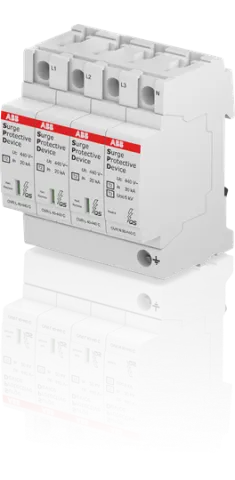
Three-phase supplies need an SPD across all phases and neutral: a 3-phase-plus-neutral unit like this ABB OVR T2 3N covers all four paths a surge can ride in on. Larger homes, homes with borewell pumps on long cable runs, and anywhere with rooftop solar are disproportionately exposed: long outdoor conductors are exactly what lightning-induced surges couple into. If the building has a lightning arrester on the roof, the DB still needs its own SPD; they protect different things.
Layer 2: the spike guard at the device
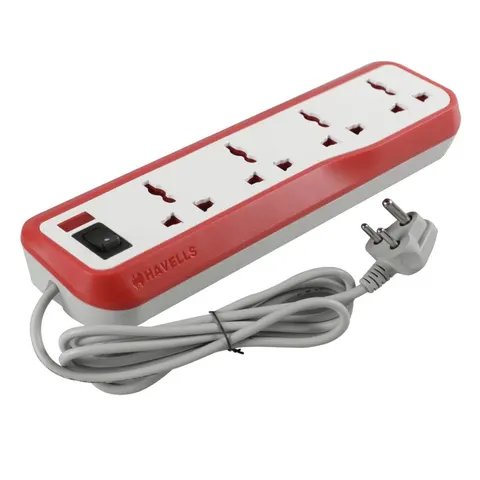
Plug-in spike guards like this Havells Ecostar carry small varistors of their own. Alone, they are the last and weakest line: a serious surge overwhelms them. AFTER a DB-level SPD has absorbed the bulk, they are exactly right for mopping up the surviving remnant at your most sensitive loads: TV, router, PC, set-top box. Buy ones that state surge protection explicitly (plain extension boards have none) and treat a guard that has taken a known hit as spent.
The niche layer: suppressors at the coil
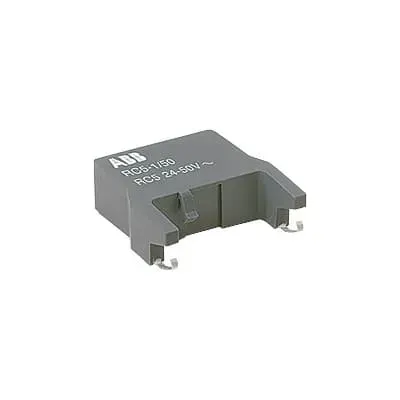
One more surge source lives INSIDE installations: every contactor coil and motor generates its own small spike each time it switches off. In pump panels and automation, a coil suppressor like this ABB RC5 clips that self-made noise at the source, protecting the timers and electronics sharing the panel. Homes rarely need this layer, but if your pump panel's timer keeps dying, this is why.
Buying tips
- Buy the DB-level SPD first, the spike guards second; the order most homes shop in is exactly backwards.
- Type 2 is the right class for homes fed by underground or short overhead lines; buildings with their own lightning rods or long rural overhead feeds should ask their electrician about a Type 1+2 combination at the origin.
- An SPD is a consumable: varistors degrade with every hit. Check the status indicator after big storms and budget a cartridge change every few years in lightning-prone areas.
- Surge protection is only as good as the earth it discharges into: if the house earthing is poor, fix that first (see our earthing guide).
- On spike guards, ignore vague 'safety' claims and look for the word surge or spike with a joule or kA figure; a 6 A board with none of that is just sockets.
- Do not run heaters or irons from surge-protected spike guards; heat loads belong on plain 16 A points and only waste the guard's capacity.
Frequently asked questions
I have a stabilizer. Am I protected against surges?
No. A stabilizer corrects slow voltage drift over seconds and its own electronics are themselves surge victims. The two devices solve different problems and coexist happily: SPD in the board for spikes, stabilizer at the AC for sag.
Is surge protection worth it if I do not live in a lightning area?
Lightning is only the dramatic source; grid switching, load shedding coming back, and big motors starting nearby all generate surges year-round everywhere. The DB-level SPD costs about as much as one dead router and adapter; it usually pays for itself the first monsoon.
Where exactly does the SPD go in my DB?
On the DIN rail immediately downstream of the main isolator or MCB, wired across phase(s) and neutral to the earth bar with short, direct conductors; every extra centimetre of lead length weakens the clamping. It protects everything downstream, which is the whole board.
How do I know when an SPD or spike guard is used up?
DB-level SPDs have a status window (green/red or similar) per cartridge: red means replace the cartridge, a five-minute job. Plug-in guards mostly have a protection LED; when it goes dark after a storm, the varistor has sacrificed itself and the board is now just sockets.
Does an SPD protect against sustained overvoltage, like a snapped neutral?
No, and this matters: a broken neutral can put near-400 V on single-phase circuits for minutes, which cooks SPDs and appliances alike. That failure needs an overvoltage protection relay or MCB add-on; ask for neutral-failure protection specifically if your area has a history of it.
Compare MRP vs the Elume price across brands, with an extra 5% wholesale rate on 15+ units.
Browse the catalogue →