

How to Procure All the Components for an MCC Panel
- Freeze the single-line diagram and motor list first. Every component follows from the feeder schedule: one row per motor with kW, starter type and control voltage.
- Split the BOM by lead time. The incomer ACB or MCCB, drives and MCCBs with accessories are ordered first. Contactors, MCBs and control gear follow. Consumables come last, but they must not be forgotten.
- Take each starter's MPCB or MCCB, contactor and overload from one brand's Type 2 coordination table, by motor kW.
- Before the PO, check three things on every line: coil voltage, auxiliary contact count and breaking capacity against the site's fault level.
- Use our free MCC panel BOM template to build the feeder schedule and BOM in one sheet.
An MCC panel is rarely late because of the expensive parts. It is late because one 25 A contactor had the wrong coil, the auxiliary blocks were missed for six feeders, or the incomer ACB had a twelve-week lead time that nobody checked when the order came in. Procurement for a motor control centre is mostly a discipline problem, and the discipline is the same on a 10-feeder panel and a 60-feeder one.
This is the sequence we see work for panel builders, from the drawing to a complete, deliverable bill of materials. It links to the parts we stock where that helps, and it is honest about what we do not stock yet.
Start from the SLD and build a feeder schedule
Do not start with a parts list. Start with the single-line diagram, and turn it into a feeder schedule with one row per outgoing feeder: load name, motor kW, full-load current, starter type (DOL, star-delta, VFD or soft starter), control voltage, auxiliary contacts needed, and any metering or PLC signals. Every component in the BOM can be traced to a row on this sheet. When the client changes a 7.5 kW pump to 11 kW in week three, you change one row and can see exactly which parts change. Our free MCC panel BOM template is laid out this way.
Order the long-lead items first: incomer, MCCBs and drives
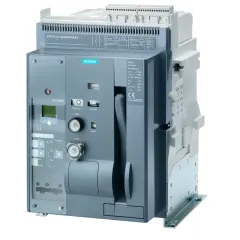
The incomer air circuit breaker is usually the single longest lead item, especially in draw-out versions with motorised mechanisms and communication. Larger MCCBs with shunt trips, undervoltage releases and rotary handles come next, then drives. Confirm the ratings with the consultant and place these orders as soon as the SLD is frozen, even before the detailed BOM is finished. This Siemens 3WT 800 A three-pole manual fixed ACB is an example of an incomer we list. Check fixed versus draw-out, manual versus electrical operation, and the release type against the specification before you order, because those choices change the part number.
Choose starter combinations from a Type 2 coordination table
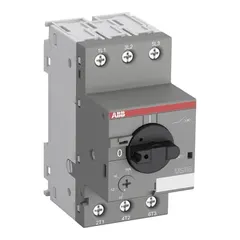
For each motor feeder, take the short-circuit device, contactor and overload as one combination from a single maker's coordination table, by motor kW and the site's prospective fault current. ABB, Schneider, Siemens and L&K all publish these tables. A motor protection circuit breaker (MPCB) such as ABB's MS116 combines short-circuit protection and adjustable overload in one device, so a DOL starter becomes MPCB plus contactor, without a separate overload relay. Set the MPCB dial to the motor's nameplate full-load current. This MS116-10 covers 6.3-10 A, which suits a 3.7 kW motor at 415 V.
Contactors: check the coil and the auxiliary count on every line
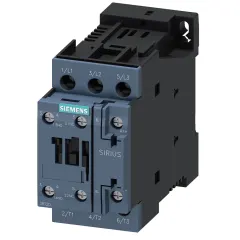
Size contactors by AC-3 current. For star-delta starters, the line and delta contactors carry about 58% of motor current (1/√3) and the star contactor about a third, but follow the maker's star-delta table rather than calculating each one. Then check two things on every line. First, the coil voltage must match the control transformer or PLC output (230 V AC, 110 V AC or 24 V DC). Second, the auxiliary contacts: count the holding contact, interlocks, PLC feedback and indication lamps, then add auxiliary blocks where the built-in contacts are not enough. This Siemens 3RT2026 (25 A, 230 V AC coil, 1 NO + 1 NC) is a common size for 11 kW DOL feeders.
Outgoing MCCBs: breaking capacity comes from the fault level
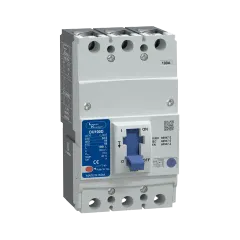
For feeders protected by MCCBs, choose the breaking capacity (Icu and Ics) from the calculated fault level at the busbar, not from the cheapest frame. A 100 A MCCB is offered at 10 kA, 18 kA, 25 kA and higher, at very different prices, and the right one depends on the transformer size and cable length upstream. This L&K DU100D is a 100 A, 18 kA thermal-magnetic unit, a common feeder breaker in mid-size MCCs. Order its accessories (aux and trip-alarm contacts, rotary handle, shunt trip) in the same order, because they are separate part numbers.
Control gear and consumables: the items that delay delivery
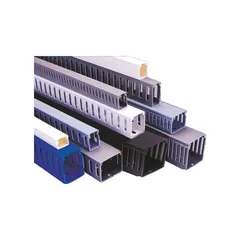
Push buttons, selector switches, pilot lamps, timers for star-delta, the control transformer, control MCBs, terminal blocks, wiring ducts, DIN rails, ferrules, lugs and cable glands are cheap. They are also the most common reason a finished panel waits a week before dispatch. Write them into the BOM by feeder count: each DOL feeder needs a start and stop button, two to three lamps and its terminals, plus a margin for spares. We stock wiring ducts such as this L&K 25 x 25 mm slotted duct, along with star-delta timers and control MCBs. We do not yet stock lugs, glands or ferrules, so order those from your usual source alongside your Elume order.
Buying tips
- Get the site fault level in writing before choosing MCCB and ACB breaking capacities. Choosing too low is unsafe. Choosing too high adds a lot of cost on every feeder.
- Ask every supplier for the lead time on each line, not for the whole order. One 12-week line holds the whole panel.
- Order 5-10% spare auxiliary blocks, control MCBs and pilot lamps. They cost little, and late changes always need them.
- Keep make and range consistent across feeders of the same size. It simplifies spares for the end client and makes repeat orders faster.
- Insist on GST invoices with HSN codes for every line. Your client's auditors, and your input tax credit, depend on them.
Frequently asked questions
What are the main components of an MCC panel?
An incomer (ACB or MCCB), busbars, outgoing motor feeders (MPCB or MCCB plus contactor plus overload, or a drive), metering (meters and CTs), control gear (control transformer, MCBs, push buttons, lamps, timers, relays) and wiring consumables (terminals, ducts, ferrules, lugs, glands). Enclosure and busbar fabrication are usually done in-house or by a fabricator.
What is Type 2 coordination in an MCC?
Type 2 coordination (IEC 60947-4-1) means that after a short-circuit, the starter is undamaged and fit for further use, apart from lightly welded contacts that can be separated easily. It is achieved by using combinations of protective device, contactor and overload that the manufacturer has tested and published.
Should I use an MPCB or an MCB plus overload relay for motor feeders?
An MPCB combines short-circuit and adjustable overload protection in one device rated for motor starting, and is the standard choice for DOL starters up to tens of amps. A general-purpose MCB is not designed for motor protection, and on its own it gives no adjustable overload protection.
How long does it take to procure MCC panel components?
Shelf items such as contactors, MCBs and MPCBs can arrive within days. Incomer ACBs, large MCCBs with accessories, and drives can take several weeks depending on brand and configuration. Order those as soon as the SLD is frozen.
Can Elume quote a full MCC BOM?
Yes. Send the BOM or feeder schedule through a bulk enquiry. We quote every line we stock, with live prices and GST invoices, flag what we do not carry, and give lead times for on-order items.
Compare MRP vs the Elume price across brands, with wholesale prices on 15+ units.
Browse the catalogue →