

Geyser Size Guide: 6L, 10L, 15L or 25L for Your Bathroom?
- Bucket baths: 10 to 15 litres per person per bath in winter. A couple's bathroom does well with 15L.
- Showers use more: a 4 to 6 minute warm shower draws 25 to 35 litres of mixed hot water, so shower households should size up.
- Kitchens and wash basins need only 1 to 6 litre instant units, not storage geysers.
- A 5-star rated geyser matters more than an extra 10 litres; standing losses run all day, bathing runs minutes.
- Check the mounting wall and clearance before buying: horizontal models exist precisely for low lofts and false ceilings.
Geyser capacity is sold in litres, but comfort is delivered in mixed hot water: the tank's contents blended down to bathing temperature at the tap. A 15 litre tank at 60 degrees yields roughly 25 to 30 litres of usable warm water in winter, which is why the sizing tables that follow are less intuitive than 'litres per bath'. Undersize and the second person waits shivering for a reheat; oversize and you pay standing losses all year for capacity used twice a winter.
This guide sizes by bathing habit and family, covers the kitchen and basin cases where instant units beat storage, and flags the fitment details, vertical versus horizontal, wall strength, and the star rating, that decide whether the right litre count is also the right purchase.
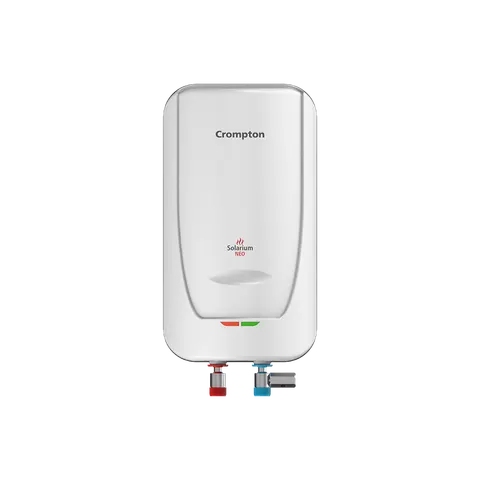
1 to 6 litres: basins, kitchens and quick rinses
Small instant units serve points where hot water is used in short bursts: kitchen sinks for degreasing utensils, wash basins in winter, and single-person quick rinses. A 3 litre instant unit under or above the kitchen sink transforms winter dishwashing while consuming nothing between uses. These high-wattage (3 kW typical) units heat in seconds but cannot sustain a full bath. If your only need is the kitchen, do not let anyone sell you a storage geyser for it; the instant category exists exactly for this and fits inside a cabinet.
6 to 10 litres: single users and bucket baths
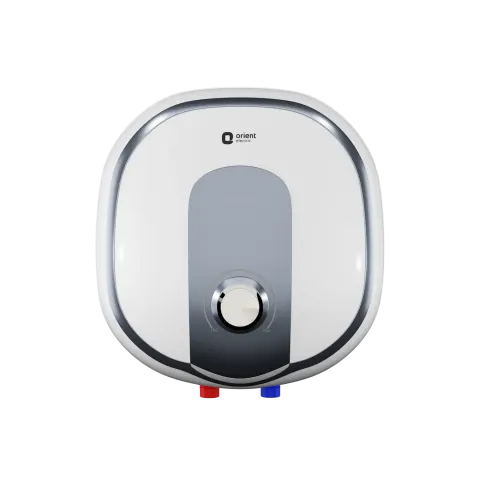
A 6 litre storage geyser covers one bucket bath comfortably in most of India; 10 litres adds margin for colder cities and slower mornings. This is the right band for a single occupant's bathroom, a guest bathroom used occasionally, or a staff bathroom. The economics are attractive: smaller tanks cost less, heat faster, and lose less heat standing. Pick a 5-star model even here; a small geyser in daily use still spends most of its life holding water warm, and the star rating measures exactly that standing loss.
15 litres: the couple's bathroom standard
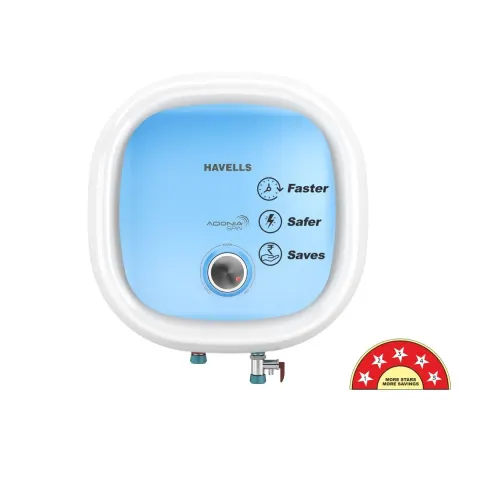
Two consecutive bucket baths, or one unhurried shower, is what 15 litres delivers, and it has become the default master-bathroom size across India for good reason. In winter a 15L tank at full temperature blends to roughly 25 to 30 litres of bathing-temperature water, enough that the second user is not waiting on the reheat if baths follow one another promptly. Families of three with mixed bucket-and-shower habits also land here when mornings are staggered. It remains compact enough for most bathroom walls without structural worry.
25 to 35 litres: shower families and back-to-back mornings
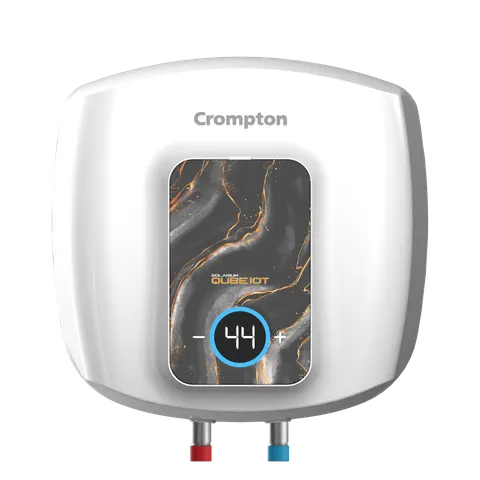
Households where everyone showers, or where three or more baths happen back to back in a single rushed hour, need 25 litres, and heavy shower use (long showers, rain showers, bathtubs) pushes to 35. A shower draws 6 to 8 litres of mixed water per minute, so two consecutive 5-minute showers can empty what a 15L tank offers. The costs of the bigger tank: slower first heat, more standing loss, more weight on the wall (a full 25L unit approaches 40 kg), so this band is for genuine demand, not 'just in case'. IoT models earn their keep here by pre-heating on schedule so capacity is ready exactly when the household needs it.
Vertical vs horizontal: let the wall decide
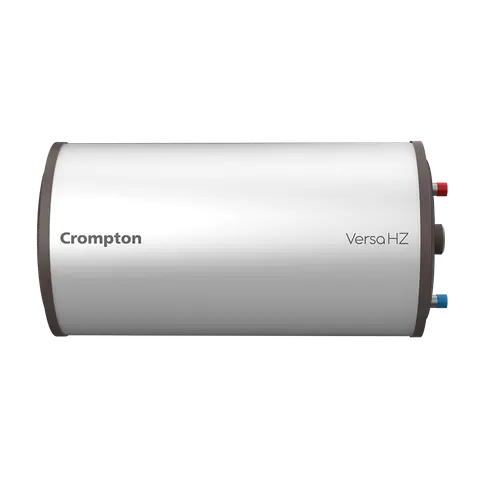
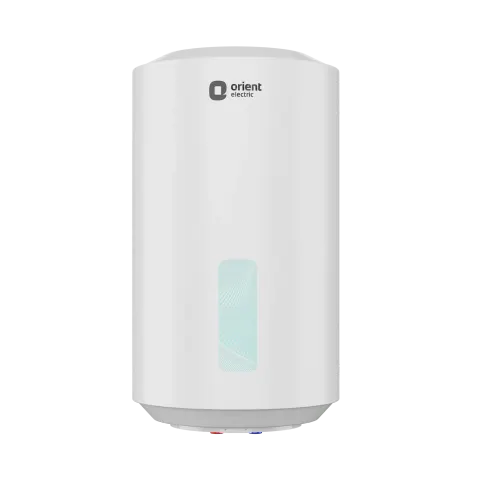
Vertical (tall) geysers are the efficient default: hot water stratifies to the top outlet, giving more usable hot water from the same tank. Horizontal models exist for bathrooms where the geyser must hide above a false ceiling or in a low loft; they trade a little delivery efficiency for fitting where vertical units cannot. Decide by measuring the intended spot before buying, including service clearance. And check what the wall is: a full 25L geyser is a permanent 35 to 45 kg load that belongs on a solid masonry wall with proper fasteners, never on a partition or hollow panel.
The star rating: litres you do not pay to keep hot
Storage geysers spend a few minutes a day heating and many hours holding water warm, so the BEE star rating, which reflects standing losses, often matters more than the capacity decision itself. Stepping from 3-star to 5-star on a daily-use 15L geyser saves real money every month, silently, for the appliance's decade of life. Also worth its price: a polymer or well-coated tank in hard-water cities (scale is what kills elements), a pressure rating suited to high-rise pumped supply, and the safety trio of thermostat, cut-out and pressure release valve from a brand that will still stock spares in eight years.
Buying tips
- Size by habit, not headcount alone: bucket bathers need 10 to 15 litres per person per bath; shower users draw 25 to 35 litres of mixed water per shower.
- For two bathrooms, two right-sized geysers beat one big one; hot water does not travel well across a flat and the pipe run wastes both water and heat.
- Buy 5-star for any geyser in daily use; standing losses dominate lifetime cost and the premium recovers within a couple of winters.
- In hard-water areas, prioritise tank and element protection (polymer tanks, glass-lined coatings, sacrificial anodes) and descale on schedule.
- Confirm the electrical circuit: storage geysers want their own 16 A point on adequately sized wire, and the bathroom's RCCB protection is non-negotiable.
- Measure the mounting spot with clearances before choosing vertical or horizontal, and mount only on solid walls rated for the filled weight.
Frequently asked questions
Which geyser size is best for a family of 4?
With bucket baths and staggered timings, 15 to 25 litres. If everyone showers, especially back to back, 25 litres is the safe choice. Two bathrooms are often better served by a 15L and a 10L than one large unit.
Is a 10 litre or 15 litre geyser better for a couple?
15 litres is the comfortable standard: two consecutive bucket baths or one relaxed shower in winter. 10 litres works for a single user or where baths are well separated in time.
What size geyser for a kitchen?
A 1 to 6 litre instant water heater. Kitchen hot water is used in short bursts, which is exactly what instant units are built for; a storage geyser there wastes money and space.
Does a bigger geyser use more electricity?
Heating a litre of water costs the same regardless of tank size, but bigger tanks lose more heat standing and tempt longer showers. Oversizing means paying standing losses year-round for capacity rarely used; the star rating controls that loss.
When should I choose a horizontal geyser?
Only when the mounting space demands it: above false ceilings, low lofts, or under-stair bathrooms. Vertical units deliver hot water slightly more efficiently, so let available space, not style, make this call.
How much usable hot water does a 15L geyser actually give?
At a 60 degree tank temperature blended down to bathing temperature, roughly 25 to 30 litres in winter. That is the number to compare against your bathing habit, not the raw tank litres.
Compare MRP vs the Elume price across brands, with an extra 5% wholesale rate on 15+ units.
Browse the catalogue →