

6A vs 16A Switches and Sockets: What Goes Where in an Indian Home
- 6 A points run lights, fans and electronics; 16 A points run heat: geyser, AC, kitchen appliances, iron.
- Kitchens need at least three 16 A counter points on 2.5 or 4 sq mm wiring.
- Universal 6/16 A shuttered sockets accept both plug sizes and are the safe default for new work.
- Never run a geyser or AC from a 6 A point; the switch becomes the weakest link on the circuit.
Every modular switch and socket in India carries one of two ratings, 6 A or 16 A, and putting the wrong one behind an appliance is the most common wiring shortcut in Indian homes. A 6 A socket feeding a room heater will warm up, discolour, and eventually char, because it is carrying nearly three times its design current.
The rule is simpler than most electricians explain it. 6 A points (up to roughly 1,400 W) are for lights, fans, TVs, routers, chargers and everything electronic. 16 A points (up to roughly 3,500 W) are for anything that heats or motors hard: geysers, ACs, room heaters, irons, microwaves, washing machines and kitchen counter appliances. This guide covers which to put where, what wire each demands, and the products worth buying.
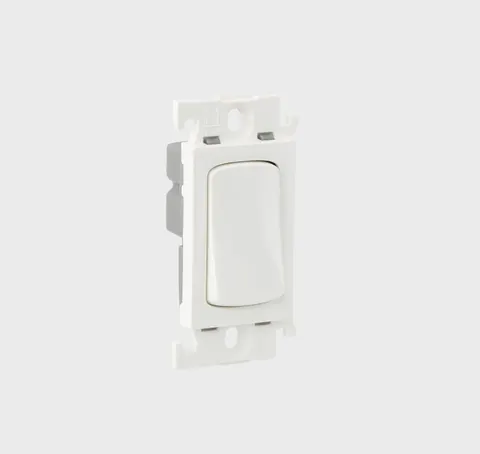
Legrand Mylinc 16A Switch, 1 Way, 1 Module
The standard 16 A one-way switch for geyser and AC points, in Legrand's value Mylinc range. Rated for the full 16 A appliance load, so the switch is never the weak link on a heavy circuit.
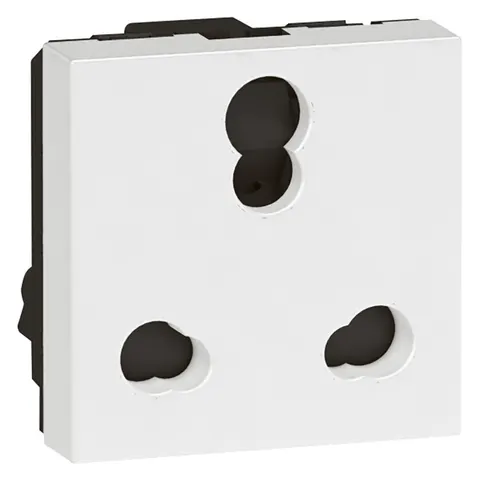
Legrand Arteor 6/16A Shuttered Socket, 3 Pin, 2 Module
The universal answer for bedrooms and living rooms: an Indian 3-pin socket that accepts both 6 A and 16 A plug tops, with child-safety shutters. One socket type for the whole wall means fewer wrong-plug moments.
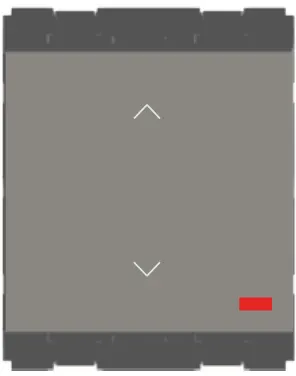
Norisys Cube 16A Two Way SP Palm Switch with Indicator
A 16 A two-way palm switch with an indicator lamp, so you can see from across the room that the geyser is still on. Two-way wiring also lets you switch the same point from inside and outside a bathroom.
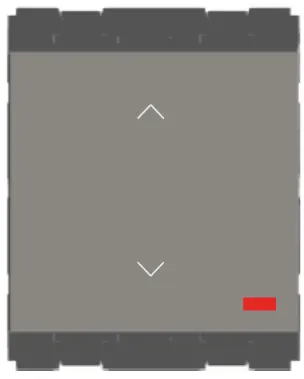
Norisys Cube 16A Two Way DP Palm Switch with Indicator
The double-pole version: it breaks both live and neutral, which is what a careful electrician specifies for water heaters. The extra pole is cheap insurance on a wet-area circuit.
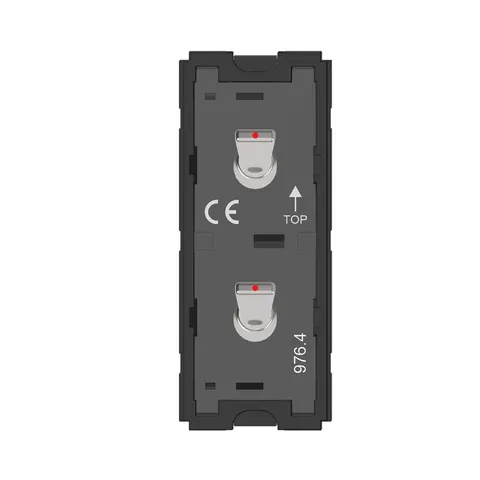
Norisys Cube 16A 1 Way + 1 Way Twin with Indicator
Two 16 A switches in a single module, for kitchen counters where the microwave and OTG sit side by side and wall space is scarce. Indicator included.
Buying tips
- Kitchens are 16 A territory: mixer, microwave, OTG, kettle and induction plates all belong on 16 A points with 2.5 or 4 sq mm wiring. Plan at least three 16 A counter points in a new kitchen.
- The wire behind the socket must match the rating: a 16 A point needs 2.5 sq mm copper minimum (4 sq mm for ACs and geysers on long runs); 6 A lighting circuits run on 1 or 1.5 sq mm. A 16 A socket on 1.5 sq mm wire just moves the melting from the socket to the wall.
- Combined 6/16 A universal sockets are worth the small premium in living areas: guests' plugs always fit, and you never discover mid-party that the socket takes only small pins.
- Buy shuttered sockets everywhere a child can reach: the shutter opens only when the earth pin enters first. Most premium ranges now include this by default.
- Match the series across a room: switches, sockets and plates from one series (Mylinc, Arteor, Cube, TG9) align and mount cleanly; mixing series across brands on one plate does not work.
Frequently asked questions
Can I plug a 6 A plug into a 16 A socket?
Into a combined 6/16 A universal socket, yes, that is exactly what it is for. A dedicated 16 A-only socket has larger pin holes, and small 6 A plugs will sit loose, which causes arcing; use a universal socket where both plug sizes are expected.
Does a 16 A switch need special wiring?
Yes. The full circuit must carry the load: 2.5 sq mm copper wire minimum, a matching 16 or 20 A MCB at the distribution board, and the 16 A switch and socket at the point. The rating on the switch is only honest when the wire behind it matches.
What happens if I run a heater on a 6 A socket?
A 2,000 W heater draws about 8.3 A, roughly 40 percent over the socket's rating. The contacts heat, the plastic discolours and softens, and over months the socket chars and can fail dangerously. Heaters, irons and kettles always go on 16 A points.
Why do some 16 A switches say DP (double pole)?
A DP switch disconnects both live and neutral, so the appliance is fully isolated when off. It is the safer choice for geysers and wet areas, where a fault to neutral could otherwise keep the appliance live even when switched off.
How many 16 A points does a 2BHK need?
Typical count: one per AC (2 or 3), one per geyser (2), three on the kitchen counter, one for the washing machine, and one spare in the living room for a heater or iron, so 9 to 10 points. Plan them at wiring time; adding 16 A points later means new 2.5 sq mm runs.
Compare MRP vs the Elume price across brands, with an extra 5% wholesale rate on 15+ units.
Browse the catalogue →