

Top 10 Ceiling & Exhaust Fans in India (2026)
- BLDC models top the rankings: Atomberg Renesa and Crompton Energion Hugo lead.
- BLDC saves about 47 W per hour over a 75 W induction fan; the premium pays back within two years of normal use.
- Match sweep to room: 1200mm for standard rooms, 900mm for small rooms and balconies.
Fans are the single largest line item in most Indian electrical bills of materials, and in 2026 the choice has fundamentally shifted from induction to BLDC. For contractors, builders and procurement managers fitting out 50, 200 or 2000 units, the difference between a 75W induction fan and a 28W BLDC fan compounds into lakhs of rupees in tenant energy bills and a real selling point. This guide ranks the ten ceiling and exhaust fans worth specifying this year, judged on motor type, air delivery, BEE star rating and total cost of ownership.
Before you compare models, fix your shortlist criteria. Look at motor type (BLDC for efficiency, induction for lowest upfront cost), sweep size (1200mm for standard 10x10ft rooms, 1400mm for halls and 12ft+ spans), rated wattage (28-35W for premium BLDC, 50-75W for induction), air delivery in CMM (aim for 220+ CMM), and BEE star rating, where 5-star is now the baseline for serious builders. Remote and IoT control matter for premium residential, less so for rental stock.
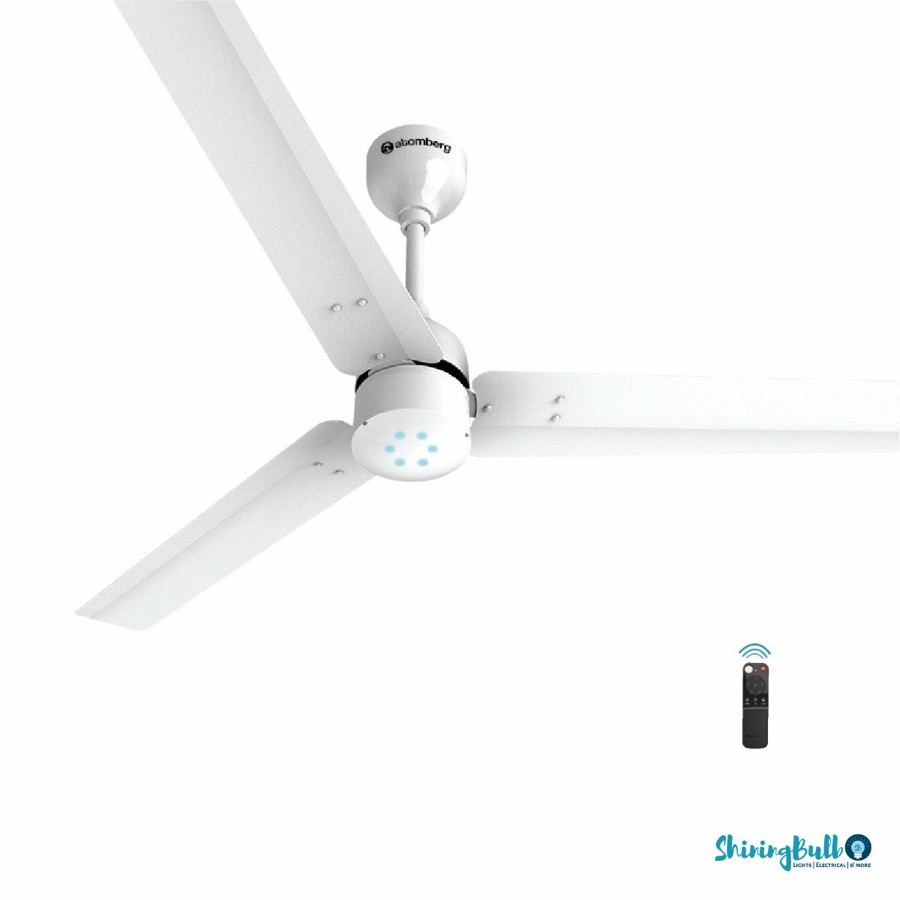
Renesa (BLDC, 1200mm)
The Renesa is the fan that mainstreamed BLDC in India and remains the benchmark. Its brushless DC motor draws just 28W at full speed versus 70-75W for a comparable induction fan, cutting fan running cost by roughly 60 percent. Air delivery sits around 235 CMM with a 1200mm sweep, and every unit ships with a remote offering timer, boost and sleep modes. It runs on smart-step speed control and works on low voltage, a genuine advantage in tier-2 and rural sites. For builders, the energy story sells itself to tenants and the 2+1 year warranty reduces callbacks.
Energion Hugo (BLDC, 1200mm)
Crompton's Energion Hugo brings BLDC efficiency under one of India's most trusted fan brands, which matters for procurement teams reassuring conservative clients. It runs at about 35W with air delivery near 230 CMM on a 1200mm sweep, carries a BEE 5-star rating and ships with a remote supporting six speeds plus timer. The wider Crompton service network is a practical advantage for projects spread across multiple cities, where Atomberg's newer footprint can be thinner. Build quality and finish are aimed squarely at mid-to-premium residential, and bulk pricing through Elume makes it competitive against induction on lifetime cost.
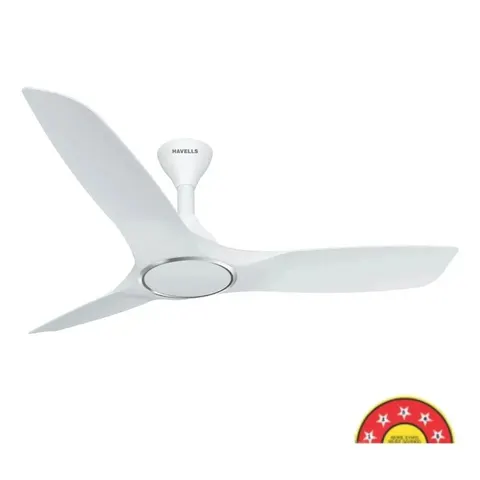
Stealth Air (BLDC, 1200mm)
The Havells Stealth Air pairs BLDC efficiency with the brand's reputation for premium finishes, making it a strong fit for higher-end apartments and villas. It operates near 32W with air delivery around 230 CMM, holds a BEE 5-star rating and includes a remote with multiple speeds, boost and a sleep timer. Havells' anti-dust coating reduces maintenance over long service cycles, useful in dusty metro and industrial-belt locations. The premium aesthetic justifies a higher price point in projects where the developer is selling on fit and finish, and Havells' channel support is among the deepest in the country.
Aeroslim (BLDC, 1200mm)
The Orient Aeroslim is the design statement of this list, an ultra-slim IoT fan that integrates flush with the ceiling and supports app and voice control via Alexa and Google Assistant. It runs on a BLDC motor at roughly 32W with a built-in LED light and underlight, and carries a 5-star rating. Air delivery is competitive for its slim profile at around 220 CMM on a 1200mm sweep. This is a specify-on-request fan for premium projects, model flats and design-led developments rather than volume rental stock, where its higher price is hard to justify against the Renesa.
Energion HS (BLDC, 1400mm)
For halls, large living rooms and 12ft-plus spans, a 1200mm fan simply cannot move enough air, and the 1400mm Energion HS solves this without sacrificing efficiency. The larger BLDC fan pushes air delivery above 260 CMM while drawing roughly 35-40W, still a fraction of a comparable induction unit. It carries a 5-star rating and includes a remote. Procurement teams should pair this with 1200mm Energion or Renesa units in a single project: 1400mm for halls and master bedrooms, 1200mm for standard rooms, keeping the same brand for warranty and service simplicity.
Efficiencia Neo (BLDC, 1200mm)
The Efficiencia Neo is Havells' value-focused BLDC option, undercutting the Stealth Air while keeping the headline efficiency intact. It runs near 32W with air delivery around 220 CMM, a BEE 5-star rating and a basic remote. For builders who want the BLDC energy story and Havells reliability but are managing tight per-unit budgets across hundreds of flats, this is the sweet spot. It lacks the premium finish and IoT features of pricier models, which is exactly why it works for volume residential. Wholesale pricing at 15+ units makes it a serious alternative to mid-tier induction fans.
Efficio (BLDC, 1200mm)
The Efficio is Atomberg's most affordable BLDC fan, bringing the 28-32W efficiency profile to the entry level. Air delivery sits around 210-220 CMM on a 1200mm sweep, with a remote and the brand's signature low-voltage performance. It trims some of the Renesa's finish and feature polish to hit a lower price, making it the natural choice when a project needs BLDC economics at the absolute lowest BLDC entry point. For rental and affordable-housing stock where every rupee per unit counts but tenants still benefit from low running costs, the Efficio is the pragmatic pick.
Hill Briz / Aura (induction, 1200mm)
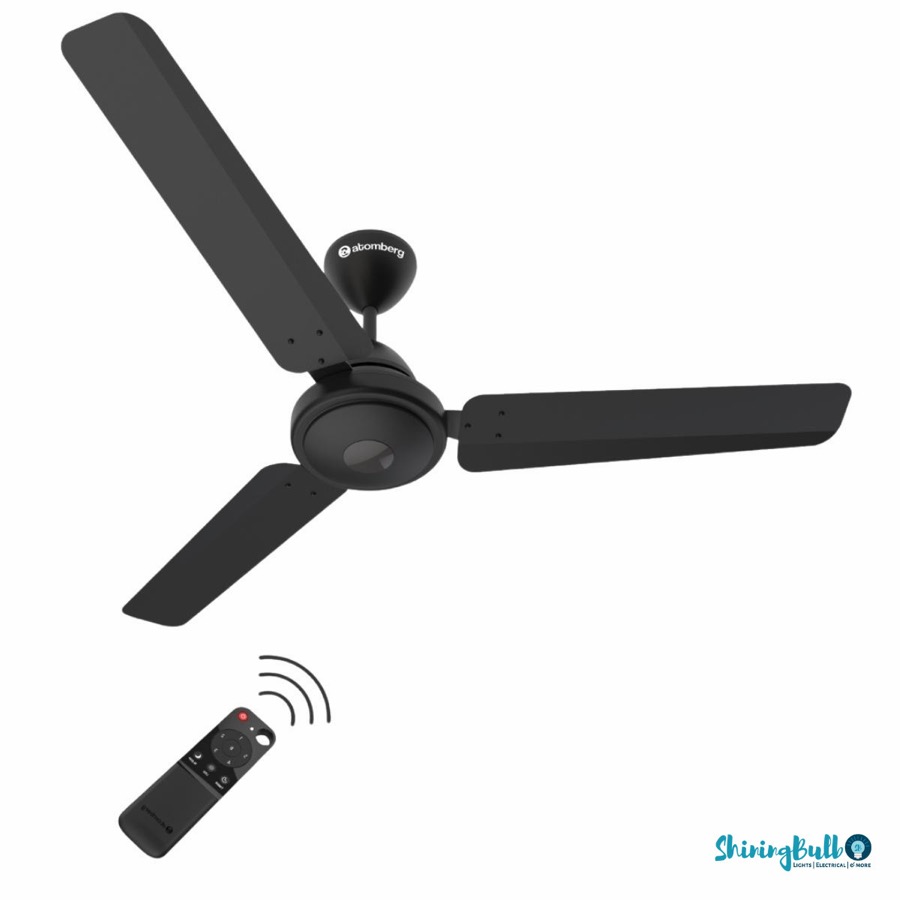
Not every project can absorb BLDC's upfront premium, and for the lowest first cost a quality induction fan still has a place. Crompton's high-speed induction range delivers strong air movement around 230 CMM on a 1200mm sweep, but at the cost of 70-75W power draw. These remain popular for budget rental units, staff quarters and commercial fit-outs where the developer, not the long-term occupant, pays the bill and capex dominates the decision. Specify these knowingly: the lower sticker price is real, but the lifetime energy cost is more than double a BLDC equivalent, a point worth raising with cost-conscious clients.
Bharat / Maxima (induction, 1200mm)
Bajaj's induction fans are a dependable, widely available workhorse for high-volume budget projects, backed by one of the oldest service networks in India. Expect air delivery around 210-220 CMM on a 1200mm sweep at roughly 70W, with a 2-star to 3-star rating depending on model. The appeal here is availability and after-sales reach into smaller towns where premium BLDC service is patchy. For government housing, institutional projects and large affordable-housing tenders where induction is mandated or budgets are fixed, Bajaj is a safe, easily serviceable specification at bulk pricing.
Crisp Air / Maxx Air Exhaust (150mm & 200mm)
No fan BOM is complete without exhaust fans for kitchens, bathrooms and utility areas. Usha's exhaust range covers the two standard sizes: 150mm (6 inch) for bathrooms and small kitchens, and 200mm (8 inch) for larger kitchens and commercial wash areas. Look for high air suction, low noise and a rust-resistant body with shutters that close when off to block backdraft and pests. For builders, exhaust fans are easy to under-spec; getting the size right per room and ordering them alongside ceiling fans in one consolidated bulk order simplifies procurement and keeps the whole project on a single warranty cycle.
Buying tips
- Run the BLDC math before deciding: a 28W BLDC fan versus a 75W induction fan saves about 47W per hour. Across hundreds of units running 8-10 hours daily, the tenant savings become a genuine sales feature, and on builder-supplied electricity, a direct cost saving.
- Match sweep to room: 1200mm for standard 10x10ft bedrooms, 1400mm for halls and spans over 12ft. Under-sizing a hall fan is the most common spec error and leads to weak air circulation and callbacks.
- Standardise brands across a project. Using one BLDC brand for ceiling fans simplifies warranty claims, service and spare availability, especially on multi-city builds where mixed brands create support headaches.
- Order ceiling and exhaust fans together in one bulk PO. Consolidating at 15+ units unlocks wholesale pricing on Elume and keeps the whole fan package on a single delivery and warranty cycle.
Frequently asked questions
Is a BLDC fan really worth the higher price for builders?
Yes, in most cases. A BLDC fan costs more upfront but draws roughly 28-35W against 70-75W for induction, cutting fan energy use by around 60 percent. For occupied units running 8-10 hours a day, the running-cost saving pays back the premium and becomes a tenant-facing selling point on energy-efficient builds.
Should I choose a 1200mm or 1400mm ceiling fan?
Use 1200mm for standard rooms up to about 10x10ft, which covers most bedrooms and small living rooms. Step up to 1400mm for halls, large living rooms and any span beyond roughly 12ft, where a smaller fan leaves dead zones. Mixing both sizes within one project is normal and recommended.
What does BEE star rating actually tell me on a fan?
The BEE star rating reflects energy efficiency measured as air delivery per watt. A 5-star fan moves more air per watt than a 2-star one. For 2026 builds, treat 5-star as the baseline for any serious specification, as it correlates closely with BLDC motors and the lowest running costs.
What exhaust fan size do I need for kitchens and bathrooms?
Use 150mm (6 inch) exhaust fans for bathrooms and small kitchens, and 200mm (8 inch) for larger kitchens, utility rooms and commercial wash areas. Prioritise high suction, low noise and a shuttered, rust-resistant body so the fan blocks backdraft and pests when switched off.
Can I get wholesale pricing on bulk fan orders through Elume?
Yes. Elume pricing moves from MRP to the Elume price, with an additional 5 percent wholesale discount on orders of 15 or more units. Consolidating ceiling and exhaust fans into a single bulk order across brands like Atomberg, Crompton, Havells and Orient is the most cost-effective way to procure for a project.
Compare MRP vs the Elume price across brands, with an extra 5% wholesale rate on 15+ units.
Browse the catalogue →